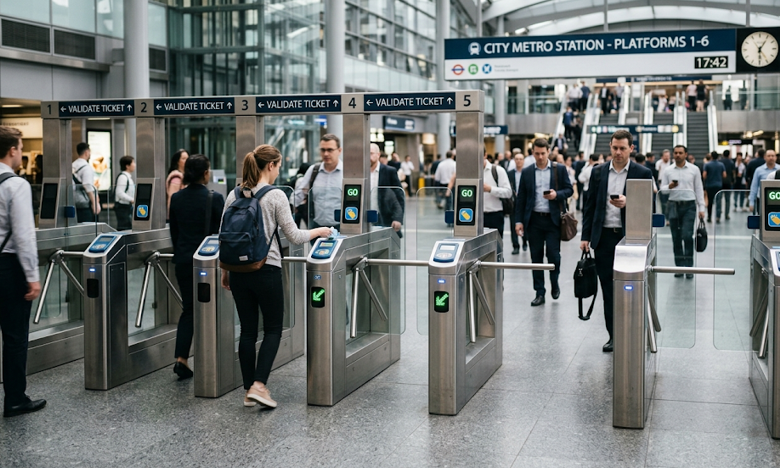
When you look at how today’s big businesses and public buildings are built, you can see that the entryway is a key spot. It’s where people can easily come in, but there’s also a need to keep things safe. As cities get more crowded, busy buildings like company headquarters or big transport stations need to let thousands of people pass through each day. They must do this without making things unsafe or slowing people down.
Now, new speed gates and turnstiles do much more than just block or let people through. These are smart tools that help manage how people move in and out of a space. They really shape how we feel when we enter a building.
The Evolution of Aesthetic XSecxurity
The old, heavy revolving bars are no longer in style. Now, people want entrance ways that have “invisible” safety and look smooth with steel and glass designs. These systems fit well with modern interiors while still giving strong safety. They use swing or sliding gates that move fast. These new gates feel very high-end and match the look you would see in a top office building.
Precision Through Advanced Detection
The main job of a turnstile today is to stop “tailgating.” This means it lets only one person with a proper pass go in at a time. The turnstile does this by using many infrared sensors. These sensors watch people as they walk through to make sure only one person goes in with each pass.
- Anti-Tailgating Feature: Advanced technology can tell if it is one person carrying a bag or two people trying to go through with one scan.
- Directional Memory: Sensors watch the movement of people. They set off alarms if someone tries to come in through a lane meant for going out only.
- Safety Buffers: Smart sensors help make sure the glass doors do not close if there is still a person or something like a suitcase in the way.
Multi-Modal Authentication Integration
The real power of new entry systems comes from how they can work with many types of ID. A simple entryway does not use just plastic cards now. The turnstile can act as a main point for many ways to show who you are:
- Biometric Recognition: Fast face recognition or fingerprint scanning lets people enter without using their hands. This makes lines move much quicker, especially in the morning when many people come in at the same time.
- Mobile Credentials: By using Bluetooth or NFC, workers can open doors with their phones. This cuts down the cost that comes up when someone loses a badge.
- QR Code Scanning: Visitors get a QR code sent to them through email for a short time. This lets them skip the front desk and scan the code to go through the gates if they have a meeting already planned.
See also: Enhancing Performance with Fumed Silica UV Coating Technology
Operational Intelligence and Data Insights
Modern turnstiles give those who run a building more than safety. They also give the people lots of details about who comes in, and when there are the most people in the building. This type of entry information is very important to help make the best use of building space and things inside.
- Occupancy Monitoring: Real-time counters help safety officers stay within fire code rules. They do this by counting how many people are on each floor at any time.
- Flow Optimization: When you look at the data, you can see which entry banks do not get used as much. Managers can then change staffing or signs to even things out.
- System Health Alerts: Networked turnstiles can find their own problems and tell the repair teams before a lane stops working.
The use of high-speed turnstiles in big buildings is now needed. It is not just a nice extra to have anymore. These systems help people move in and out fast, while keeping everyone safe by making sure security is not weak. This makes the first spot where someone enters a building ready for new tech, safe, and good at handling many people at one time. As smart cities get bigger, the entryway will keep being a key spot for smart city control.