Racquet sports have historically depended on partners. Tennis, pickleball, badminton — all of them are built around rallies, which meant solo practice was traditionally limited to hitting against a wall or firing balls from a fixed-pattern machine. That’s changing quickly. Over the past few years, a new category of intelligent training equipment has emerged, and it’s fundamentally reshaping what independent practice can look like.
What’s Actually Driving This Shift
The growth of AI sports equipment in racquet sports isn’t just a marketing trend — it reflects real advances in computer vision, spatial sensing, and adaptive delivery systems that have become small and affordable enough to fit into consumer training products. What used to require expensive, lab-grade tracking systems used by professional academies is now available in portable machines built for everyday players.
Three technical developments have made this possible: cameras and sensors capable of tracking players and balls in real time, software that can adjust delivery patterns based on that tracking data, and hands-free control systems (app and voice-based) that let players manage complex settings mid-session without interrupting practice flow.
See also: How Jewelry Becomes Part of Your Everyday Lifestyle
From Fixed Patterns to Responsive Training
The core shift is moving away from machines that repeat the same feed indefinitely, toward systems that respond to what’s actually happening during a session. Traditional ball machines are excellent for pure repetition, but they can’t tell whether a player has recovered position after a wide shot, or adjust based on shot accuracy from the previous rep.
Intelligent training systems close that gap. By tracking player position and shot outcomes, they can vary feed placement, timing, and intensity to reflect more realistic practice conditions — closer to training with a responsive partner than repeating drills against a static feeder.
Why This Matters Specifically for Racquet Sports
Racquet sports are uniquely dependent on anticipation, footwork, and shot selection under pressure — skills that are difficult to develop through isolated repetition alone. A player can groove a perfect stroke in isolation and still struggle in live play if they haven’t practiced recognizing patterns and reacting under realistic conditions.
This is where AI-driven equipment provides real value. Adaptive drills, opponent-style simulations, and performance tracking allow players to practice decision-making and movement, not just mechanics — addressing a training gap that solo practice has never adequately solved until recently.
Pickleball’s Rapid Adoption of Smart Training Tools
Pickleball has seen this shift particularly quickly, partly because of how fast the sport’s competitive scene has grown. As more players move from casual play toward structured improvement, demand for tools that support serious solo practice has followed.
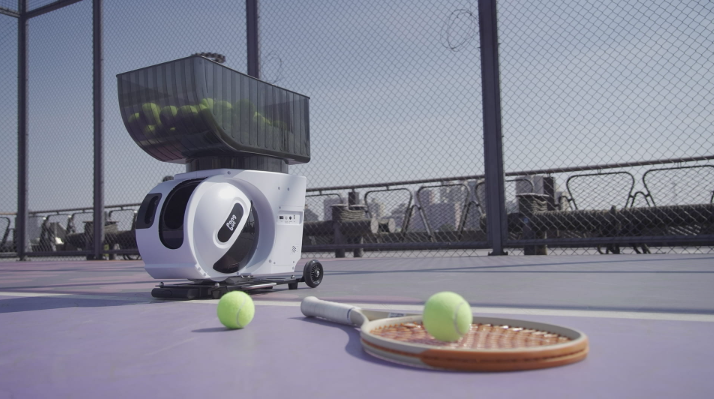
A pickleball training robot built around AI vision reflects this trend directly — combining programmable feeding with real-time ball-landing analysis and adaptive training modes. Instead of just delivering shots, systems like this help players understand placement accuracy and react to varied, less predictable patterns, addressing the same fundamental gap that’s driving adoption across racquet sports more broadly.
Data as a Core Training Feature
One of the more significant shifts brought on by this technology isn’t just physical — it’s informational. Older training equipment offered no feedback beyond what a player could observe themselves. Modern systems generate performance reports, shot analysis, and landing data that give players objective information about their practice.
This changes how improvement gets measured. Rather than relying on how a session “felt,” players can track specific metrics over time — shot placement accuracy, consistency across drill types, and reaction to varied feed patterns. For self-directed players without regular access to a coach, this data becomes a practical substitute for expert feedback.
Accessibility and the Democratization of Advanced Training
Perhaps the most meaningful part of this shift is who now has access to these tools. Vision-based tracking and adaptive training systems were, until recently, largely confined to professional training facilities. Portable consumer machines have brought similar underlying technology to club players, juniors, and serious amateurs training on their own schedule.
This accessibility matters because consistent, high-quality practice has always been one of the biggest differentiators in skill development — and it was previously gated behind coaching costs or facility access that many players simply didn’t have.
Where This Trend Is Headed
As sensing technology continues to improve and costs decrease further, it’s likely that adaptive, AI-assisted training will become the standard expectation rather than a premium feature. The gap between “practicing alone” and “training with structured, responsive feedback” is narrowing quickly, and racquet sports are among the clearest examples of how that shift is playing out in practical, accessible equipment.
Final Thoughts
The rise of AI-driven training equipment reflects a broader change in how solo practice works across racquet sports. What used to be limited to repetitive, fixed-pattern drilling has evolved into responsive, data-informed training that adapts to how a player actually performs. For players serious about improvement without constant reliance on a coach or partner, this shift represents one of the most practical advances in independent training in years.
FAQs
1. What technologies make AI sports equipment possible? Advances in computer vision, spatial sensing, and adaptive delivery systems allow machines to track players and balls in real time and adjust training patterns accordingly.
2. How is this different from traditional ball machines? Traditional machines repeat fixed patterns regardless of player performance. AI-driven systems adjust feed placement and timing based on real-time tracking data, creating more realistic practice conditions.
3. Why has pickleball adopted this technology so quickly? The sport’s rapid competitive growth has increased demand for structured solo training tools, making adaptive, AI-powered machines especially popular among improving players.
4. Does this type of equipment provide performance data? Yes. Many systems generate shot analysis and performance reports, giving players objective feedback that was previously only available through in-person coaching.
5. Is this technology only useful for advanced players? While advanced players benefit significantly from adaptive training, many systems offer adjustable difficulty, making them useful across a range of skill levels, from developing players to competitive athletes.