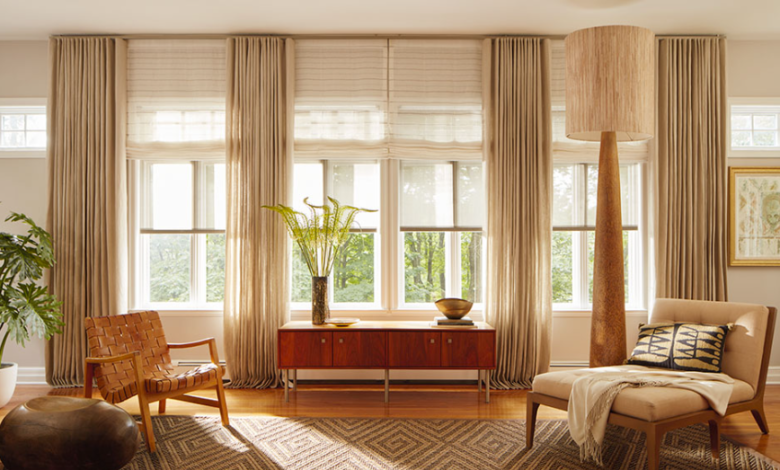
Choosing blinds is easier when the decision starts with how the room is used rather than with a product name.
Two blinds can look equally suitable in photographs but behave very differently once fitted. The amount of light they control, how much of the window they cover when open, how they create privacy, and how easy they are to operate all matter more in daily life than a catalogue image.
Pleated and vision blinds are good examples. Both can provide a neat, contemporary finish, but they solve different problems. Pleated blinds are valued for their compact fabric construction, while vision blinds are designed to give more adjustable control between openness and privacy.
The right choice depends on the window, the room, and what the household actually wants the blind to do.
Start with the problem the room needs to solve
Before comparing mechanisms, identify the main requirement.
Some rooms need privacy throughout the day. Others need glare reduction without losing too much daylight. A bedroom may need stronger evening coverage, while a kitchen or living room may benefit from a more flexible balance between open views and screening.
Useful questions include:
- Is privacy needed mainly during the day, at night, or both?
- Does direct sunlight create glare?
- Is maintaining a clear view outside important?
- How often will the blind be adjusted?
- Is the window particularly narrow or compact?
- Does the room need a visually light window treatment?
- How much maintenance is realistic?
Answering these questions first usually makes the product comparison much clearer.
See also: Enhancing Performance with Fumed Silica UV Coating Technology
Pleated blinds can work well where a compact profile matters
Pleated blinds use fabric that folds into a series of neat pleats as the blind is raised.
Their relatively compact construction can make them attractive for windows where a bulky blind would dominate the opening.
This can be particularly useful in smaller rooms or on windows where preserving as much visible glass as possible matters.
Homeowners researching pleated blinds Leeds should look at more than colour and fabric. The available fitting space, the amount of material visible when the blind is open, and the level of privacy required should all form part of the decision.
A neat stack is valuable only when the blind also performs properly for the room.
Window proportions influence how a blind feels
A blind that looks balanced on a wide living-room window can feel heavy on a narrow opening.
This is why proportion matters.
For smaller windows, consider:
- the depth of the headrail or mechanism;
- how much glass remains visible;
- the size of the fabric folds;
- where controls will sit; and
- whether the blind visually overwhelms the frame.
The aim is to create a window treatment that feels integrated rather than added on.
For particularly compact openings, a restrained mechanism can make the room feel less cluttered.
Light control is not the same as darkness
One of the most common mistakes is treating all light control as though the goal were complete darkness.
Most rooms need something more flexible.
A living room might need glare reduction during the afternoon but still benefit from natural daylight. A kitchen may need privacy without feeling closed in. A home office may need to reduce reflections on a monitor while keeping the room bright enough to work comfortably.
Fabric opacity plays a role, but the way the blind operates is equally important.
The correct choice should reflect when the problem occurs and how much control is actually necessary.
Vision blinds provide a different type of adjustment
Vision blinds generally use alternating areas of fabric that can be aligned to change the relationship between openness and screening.
This creates a different style of light control from a conventional pleated blind.
Rather than thinking of the window as simply open or covered, the user may be able to make smaller adjustments depending on the position of the fabric.
For people comparing vision blinds Bradford, the useful question is whether that adjustable balance between daylight and privacy suits the room’s daily routine.
A living area where conditions change throughout the day may benefit from flexible adjustment, while another room may need a simpler blind that is usually either raised or lowered.
Daytime and night-time privacy should be considered separately
Privacy changes after dark.
During the day, external daylight can sometimes make it more difficult to see into a room. At night, interior lighting can reverse that situation and make the room more visible from outside.
This means a blind that feels private during daylight should not automatically be assumed to provide the same effect after dark.
When privacy is important, assess the blind in realistic conditions.
Think about:
- neighbouring houses;
- ground-floor windows;
- rooms facing public roads;
- internal lighting after dark; and
- whether the blind will regularly be adjusted in the evening.
This is more useful than relying on a broad claim that a product is simply “private.”
Consider the way the window opens
The blind cannot be chosen independently of the window.
Handles, vents, and opening direction may affect where the product can be installed and how easy it is to use.
Before ordering, check whether:
- the window opens inward;
- handles project into the recess;
- trickle vents require clearance;
- the blind will obstruct normal movement; and
- controls remain easy to reach.
A blind may be visually appropriate yet still be the wrong choice if it creates a daily conflict with the window.
Room conditions should influence the fabric
The mechanism is only half of the decision.
Fabric also has to suit the room.
A bedroom may prioritise stronger light reduction and privacy. A living room may favour softer daylight. A kitchen may require a practical surface that is easier to maintain.
Consider the room’s:
- moisture levels;
- exposure to cooking;
- direct sunlight;
- frequency of use;
- cleaning requirements; and
- existing colours and materials.
The best-performing blind is one that remains practical after the initial appearance is no longer new.
Pleated blinds can suit rooms where visual simplicity matters
Not every interior needs a highly decorative window treatment.
In rooms with strong architectural details, patterned wallpaper, busy furnishings, or attractive views, a simple blind can prevent the window from competing with the rest of the space.
People considering pleated blinds Oldham may therefore want to judge the product in both its open and closed positions. A compact blind can help preserve the appearance of the glazing when raised while still providing useful coverage when needed.
The important point is whether that simplicity also meets the room’s privacy and light-control requirements.
Maintenance is part of the buying decision
A blind that looks attractive but is awkward to clean may become frustrating over time.
Think realistically about where the blind will be installed.
In a bedroom or formal living room, fabric may remain relatively clean. In a kitchen or busy family space, dust, cooking residue, or frequent handling may make maintenance more important.
Before choosing a material, ask how easily it can be maintained and whether the household is comfortable with the level of care required.
This is especially important when comparing different fabric constructions.
Compare how the blind looks when fully open
Most product photographs show blinds partially or fully closed.
The open position deserves equal attention.
Ask:
- How much material remains visible?
- How large is the headrail or cassette?
- Does the blind block part of the glass when raised?
- Does the stack suit the proportions of the window?
- Can the window still open comfortably?
These practical details affect the room every day.
A product that performs well when closed but permanently reduces the visible glass area may not suit a room where natural light and the outside view are priorities.
Professional measuring reduces avoidable problems
Made-to-measure blinds depend on more than a single width and drop measurement.
A proper assessment may need to consider:
- recess width at several points;
- window squareness;
- available depth;
- handles;
- vents;
- fixing surfaces;
- opening direction; and
- control position.
The selected blind also needs to be considered as part of the measurement.
A measurement that works for one blind system may not necessarily produce the same fitting result for another.
A practical way to compare the two options
Before making the final decision, compare pleated and vision blinds against the same set of requirements:
- Fit: Does the system suit the window dimensions and available depth?
- Light: How much daylight needs to remain in the room?
- Privacy: Is screening required during the day, at night, or both?
- Operation: How frequently will the blind be adjusted?
- Appearance: How much of the blind remains visible when open?
- Maintenance: Is the material appropriate for the room?
- Access: Will handles, vents, and window movement remain unobstructed?
This comparison is more useful than asking which blind is universally better.
There is no single winner.
The stronger choice is the one that matches the particular opening and the way the room is used.
The final decision should be easy to explain
A good blind specification should make sense without relying on marketing language.
You should be able to explain why the chosen product suits the window, what type of light control it provides, how it handles privacy, and why its operation works for the household.
If those answers are unclear, the shortlist probably needs more work.
Pleated blinds may be attractive where compact construction and simplicity are important. Vision blinds may make more sense where adjustable daylight and privacy are priorities.
The best decision comes from matching those characteristics to the room rather than choosing a blind because its name, colour, or photograph happens to look appealing.
Frequently Asked Questions
What is the main difference between pleated and vision blinds?
Pleated blinds use fabric that folds into compact pleats as the blind is raised. Vision blinds use layered fabric sections designed to provide adjustable levels of openness and screening. The better option depends on whether the room prioritises compact coverage, flexible light control, privacy, or a particular visual style.
Are pleated blinds suitable for small windows?
They can be a useful option for compact openings because their folded construction can create a relatively neat appearance. However, the actual headrail, fitting depth, handle clearance, and amount of fabric remaining visible when open should still be checked before ordering.
Do vision blinds provide privacy at night?
Privacy should always be assessed in the conditions in which the blind will be used. Interior lighting can make rooms more visible from outside after dark, so the blind’s position and fabric alignment should be checked rather than assuming daytime screening will provide identical night-time privacy.
Should blind choice depend on the room as well as the window?
Yes. A technically suitable blind may still be inappropriate for the room. Bedrooms, kitchens, home offices, and living rooms can have very different requirements for privacy, glare reduction, cleaning, and frequency of operation.
Why is professional measuring useful for made-to-measure blinds?
Professional measuring can account for recess depth, uneven openings, handles, vents, fixing surfaces, and window movement as well as width and height. It also allows the chosen blind system to be considered during the measurement rather than treating every product as though it fits in exactly the same way.