Every hi-fi system faces the same choice: one integrated amplifier, or separate preamplifier and power amplifier boxes. Both routes can sound excellent, and both have loyal supporters. The right answer depends on your budget, your space, your appetite for upgrading, and how much complexity you are willing to live with.
What Separates Actually Are
A separate system splits the amplifier into two boxes. The preamplifier handles source selection and volume control, taking the quiet signal from your sources and preparing it for amplification. The power amplifier takes that prepared signal and gives it the strength to drive your speakers. Each box has its own chassis, its own power supply and its own circuit, optimised for its single job.
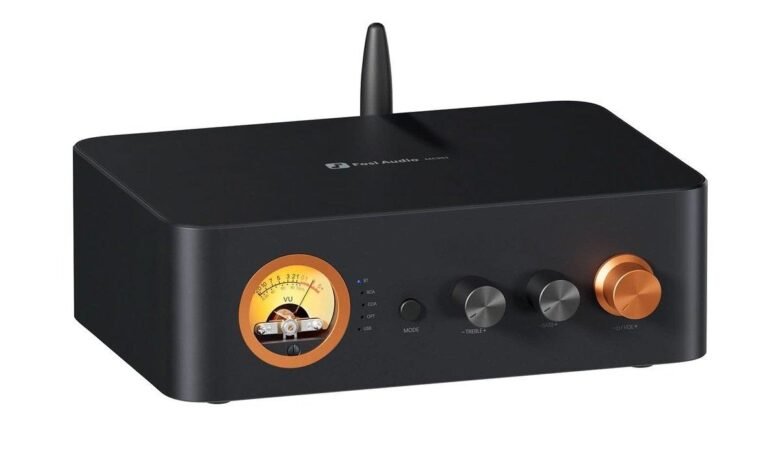
An integrated amplifier combines both stages in one box, sharing a chassis and a power supply. It is simpler, smaller and cheaper, but the two stages live side by side, which is the trade-off at the heart of the comparison.
The Case for an Integrated Amplifier
An integrated amplifier wins on simplicity and value. One box means one purchase, one power cable, one shelf and fewer interconnects. The money that would have gone into a second chassis and extra cabling goes into the sound instead, which is why an integrated amplifier often outperforms separates at the same total price.
It also wins on space. A single unit fits easily in a living room, on a shelf or beside a television, and it is simple enough for anyone in the household to use. For most listeners, in most rooms, an integrated amplifier is the sensible choice.
The Case for Separates
Separates win on performance potential and flexibility. Because each stage has its own power supply, the sensitive preamplifier circuits are isolated from the high currents of the power amplifier, which can lower noise and improve detail. Each stage can also be optimised without compromise: a larger power supply here, a quieter circuit there.
Flexibility is the other advantage. With separates, you can upgrade one stage without replacing the other. If your power amplifier is already excellent but your preamplifier is outdated, you replace only the preamplifier. That staged upgrade path appeals to listeners who build their system over years.
Cost, Space and Complexity Compared
Cost is the clearest difference. At a given budget, an integrated amplifier usually delivers more performance per pound, because you are not paying for two chassis, two power supplies and extra cabling. Separates cost more to reach the same level, and they need more space and more careful cable management.
Complexity matters too. A separate system has more connections, more settings and more things that can go wrong. An integrated amplifier is a single unit that you connect and enjoy. For listeners who want music rather than a hobby in equipment management, that simplicity is worth a great deal.
5 Questions That Decide the Answer
- What is my budget, and what does each route deliver for it?
- How much shelf space do I have for the system?
- Do I enjoy upgrading piece by piece, or do I want a finished system?
- Are my speakers demanding enough to benefit from a separate power amplifier?
- Who else uses the system, and how simple does it need to be?
A Practical Middle Path
Many listeners start with an integrated amplifier and move to separates later, when the rest of the system is ready. Some integrated amplifiers even offer a preamplifier output, which lets you add an external power amplifier while keeping the integrated unit as the preamplifier. This middle path gives you the simplicity now and the upgrade route later, without committing to either extreme.
Resale Value and Long-Term Ownership
Amplifiers hold their value better than many electronic devices. A well-made integrated amplifier or power amplifier can serve for a decade or more, and when you do decide to sell it, a respected brand in good condition will still attract buyers. Separates sometimes hold value better than integrated units, because each box can be sold on its own, but the difference is modest.
Whatever route you choose, keep the original packaging if you can. It protects the amplifier during a move and makes resale far easier. Keep the manual and the receipt too, since a complete package with documentation is always more attractive to a buyer.
Frequently Asked Questions
Do separates always sound better than an integrated amplifier?
No. At the same price, an integrated amplifier often sounds as good or better, because its budget is concentrated in one box. Separates show their advantage when the budget is larger and each stage can be properly optimised.
Can I mix an integrated amplifier with a separate power amplifier?
Yes, in many cases. If your integrated amplifier has a preamplifier output, you can connect an external power amplifier and use the integrated unit as the preamplifier.
Which route is better for a first hi-fi system?
An integrated amplifier, in almost every case. It is simpler, better value and easier to set up, and it leaves more of your budget for speakers, which make the biggest difference to the sound.
See also: Wearable Technology Innovations in Healthcare
Final Thoughts
The choice between an integrated amplifier and separates is a choice between simplicity and flexibility. An integrated amplifier gives you excellent sound, good value and an easy life in one box. Separates give you the highest performance ceiling and a staged upgrade path, at a higher cost in money and space. There is no wrong answer, only the answer that fits your room, your budget and the way you listen, so choose the route that suits your life best. Take your time, listen carefully, and trust your own ears.