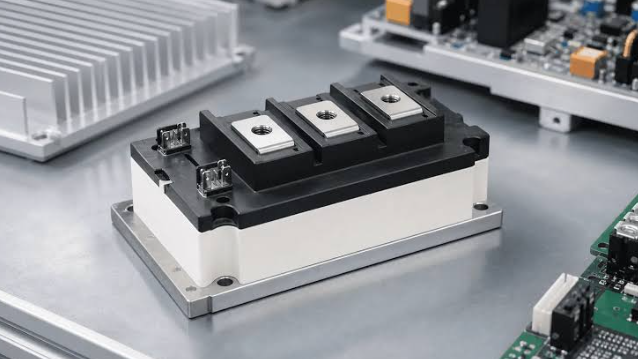
IGBT (Insulated Gate Bipolar Transistor) sourcing requires evaluating supplier reliability, manufacturing consistency, and specification accuracy, particularly as global demand for high-efficiency power switching components continues to grow across renewable energy, industrial automation, and electric mobility applications. For procurement and engineering teams, understanding both current market dynamics and practical sourcing strategies is essential to avoiding supply disruptions and component mismatches.
This guide covers the key trends shaping the IGBT market today and practical strategies for sourcing these components reliably.
Why IGBT Demand Continues to Grow
IGBTs sit at the center of several fast-growing industries. Renewable energy systems rely on them for efficient inverter switching, electric vehicles and industrial motor drives depend on them for power control, and industrial automation increasingly requires efficient, reliable switching components as manufacturing processes become more electrified.
This convergence of demand across multiple high-growth sectors has put sustained pressure on global IGBT supply chains, making sourcing strategy a more important consideration than it may have been in previous years when supply was more consistently available across a wider range of suppliers.
See also: How Jewelry Becomes Part of Your Everyday Lifestyle
Key Market Trends Affecting IGBT Sourcing
Rising demand from renewable energy applications. As solar and other renewable energy installations continue expanding globally, demand for inverter-grade IGBTs has grown correspondingly, since these components handle the core switching function in most modern inverter designs.
Increased focus on efficiency standards. Industrial and energy applications are increasingly prioritizing components with lower switching losses and better thermal performance, driving demand toward more advanced IGBT designs rather than older, less efficient alternatives.
Supply chain diversification. Given past disruptions across semiconductor supply chains broadly, many buyers are prioritizing suppliers with demonstrated manufacturing consistency and reliable lead times over single-source dependency.
Growing application-specific specialization. As IGBT use cases diversify across industries, manufacturers increasingly offer application-specific product lines rather than one-size-fits-all components, making it more important for buyers to match specifications precisely to their intended use case.
A comprehensive IGBT guide covering these dynamics in depth explains how efficiency advantages, industrial applications, and supplier evaluation considerations intersect — providing useful context for teams building or refining their sourcing strategy around current market conditions.
Practical Sourcing Strategies for IGBTs
Evaluate manufacturing consistency, not just specifications. Two IGBTs with identical published specifications can perform differently in practice if manufacturing quality control varies between suppliers. Prioritizing manufacturers with demonstrated consistency across production batches reduces the risk of performance variability in the field.
Match component specifications precisely to application requirements. Given the growing trend toward application-specific IGBT designs, sourcing decisions should start with a clear definition of voltage, current, switching frequency, and thermal requirements rather than selecting based on general category alone.
Consider supplier diversification for critical applications. For high-volume or mission-critical projects, relying on a single supplier increases exposure to supply disruptions. Establishing relationships with multiple qualified suppliers, even if one serves as a primary source, provides useful flexibility.
Request documentation and certification verification. Given the safety and reliability implications of power switching components, verifying certifications and testing documentation should be a standard part of the sourcing process rather than an optional step.
Factor in lead times during project planning. Especially for larger industrial or renewable energy projects, IGBT lead times should be factored into project timelines early, rather than assumed to match general market averages without supplier-specific verification.
IGBTs Within a Broader Component Sourcing Strategy
IGBT sourcing rarely happens in isolation from other power semiconductor components. Many industrial and energy system designs also require transistors for complementary switching or amplification functions within the same broader circuit. Reviewing available Goodark transistor products alongside IGBT options can help teams evaluate whether a single manufacturer can reliably supply multiple component types needed for a project, simplifying supplier relationships and improving consistency across an entire system design.
Evaluating Suppliers: What Actually Matters
When comparing potential IGBT suppliers, a few factors consistently matter more than others in practice: documented quality control processes, consistency of specifications across production batches, responsiveness to technical inquiries, and transparency around lead times and capacity constraints. Suppliers who provide clear, verifiable information in these areas tend to present lower long-term sourcing risk than those competing primarily on price alone.
Final Thoughts
IGBT sourcing in today’s market requires more deliberate strategy than simply comparing datasheets and prices. Understanding current market trends — including rising renewable energy demand, efficiency-driven design shifts, and supply chain diversification — helps inform a more resilient sourcing approach. Combined with careful supplier evaluation and precise specification matching, this strategic approach reduces both performance risk and supply disruption risk for projects depending on reliable IGBT availability.
FAQs
Why is IGBT demand increasing across multiple industries? Growth in renewable energy, electric mobility, and industrial automation has increased demand for efficient power switching components, with IGBTs serving as a core technology across all three sectors.
What should buyers prioritize when sourcing IGBTs? Key priorities include manufacturing consistency, precise specification matching to application requirements, verified certifications, and realistic lead time planning.
Is supplier diversification necessary for IGBT sourcing? For high-volume or mission-critical applications, working with multiple qualified suppliers reduces exposure to supply disruptions compared to relying on a single source.
How does application-specific IGBT design affect sourcing decisions? As manufacturers increasingly offer application-specific product lines, buyers need to define technical requirements clearly upfront rather than selecting components based on general category alone.
Should IGBT sourcing be evaluated alongside other components like transistors? Yes. Many system designs require both IGBTs and transistors for different switching functions, so evaluating whether a supplier can reliably provide multiple component types can simplify sourcing and improve consistency.