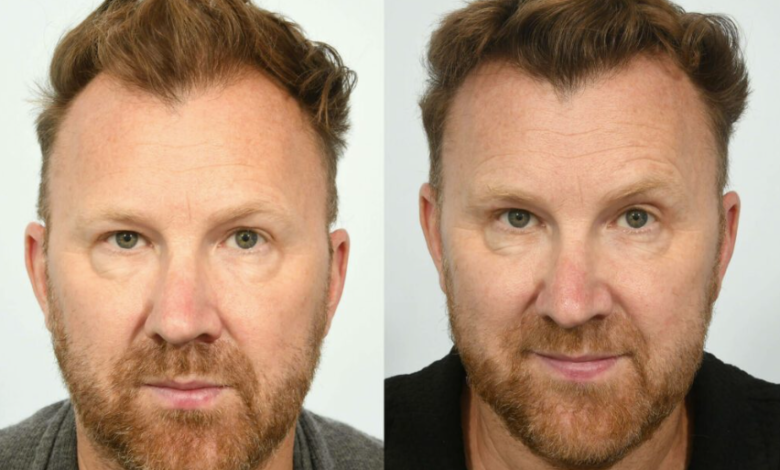
Ranking two countries is the wrong shape of question, and it is a large part of why people end up disappointed by a transplant that was technically inexpensive.
Neither country performs your surgery. A specific person does, in a specific facility, following a specific plan for your specific pattern of loss — and the range of quality inside Turkey is wider than the average gap between Turkey and the United States. Turkey has surgeons whose case volume and results stand up against anyone in the world, and it also has operations where you will never meet the person who designed your hairline. The reverse holds too: the United States has outstanding hair restoration surgeons, and it has practices happy to sell you grafts you do not need.
So the comparison worth running is not country against country. It is offer against offer, on identical questions.
What “Better” Has to Mean Before the Question Works
“Better” collapses into at least five separate things, and they do not all point the same way:
- Naturalness at ten years, not at ten months
- Density achieved per graft used
- Donor area preserved for the surgery you may need later
- Scarring, which is never zero
- What happens when something goes wrong, and how far away it happens
Notice that only one of those is visible in a before-and-after photograph, and it is the one taken at the most flattering moment. If you rank countries on galleries, you are ranking photography.
See also: Wearable Technology Innovations in Healthcare
The Honest Case for Travelling
It is a real case and it deserves stating properly rather than dismissed.
Volume produces skill. Turkey performs an enormous number of these procedures, and high-volume centres develop refined extraction technique, well-drilled teams and efficient long-day workflows. Cost differences are genuine, driven by local salaries, facility overheads and the absence of a US-style insurance and liability structure — not by cutting the operation itself. And practically, a large restoration can be done in one or two long sessions on a single trip, which suits people who cannot take repeated time off.
For a well-selected patient at a properly run centre with a licensed physician doing the surgical work, the outcome can be excellent. That is not marketing; it is the reason the sector exists at all.
The Honest Case for Staying in the United States
Also real, and rarely stated without an agenda.
You get continuity. Hair loss is progressive, so the surgeon who plans your hairline at thirty ideally reviews it at thirty-five and forty. You get a regulatory and complaints framework you can actually use, and malpractice cover you can verify. You get to be seen in person at three months, six months and a year, when the result is still forming. And if something needs correcting, the person who corrects it is the person who did it.
You also get a medical relationship. Male and female pattern loss is a diagnosis, not just a shape — and thyroid disease, iron deficiency, scarring alopecias and telogen effluvium all masquerade as it. Transplanting into an undiagnosed inflammatory scalp condition is a way of wasting irreplaceable donor hair.
The Question That Outranks the Country
Here is the variable that matters more than the flag: who physically performs the extractions and creates the recipient sites?
The International Society of Hair Restoration Surgery has campaigned publicly on this for years, warning that unlicensed technicians performing substantial parts of hair restoration surgery are putting patients at risk — of misdiagnosis, of missed underlying disorders, and of unnecessary or ill-advised surgery. The society’s position is that diagnosis, planning, hairline design, donor harvesting and recipient site creation are physician acts, not delegable ones, and it has specifically warned people travelling abroad to verify who will be operating and whether that is even legal where they are going.
That is not an argument about Turkey. It is an argument about a business model that exists in several countries, including inside the United States. The defence is the same everywhere: get the operating physician’s name and licence in writing, and ask precisely which steps they perform themselves and which are done by assistants.
If a provider deflects that question, you have your answer, and the flag on the website is irrelevant.
Your Donor Area Is a Fixed Budget
This is the part almost nobody considers before the first procedure, and it is the part people regret.
You have a finite quantity of permanent donor hair. Every graft moved is spent for good. If a first procedure over-harvests to fill a low, dense hairline in a young patient whose loss is still advancing, there may be nothing left to cover the crown a decade later — and thinned donor areas are difficult to disguise and effectively impossible to restore.
So conservative planning is not timidity. A surgeon who designs a mature hairline, declines to chase maximum density in one sitting, and talks about your fifties is protecting an asset you cannot replace. A provider who quotes an unusually large graft number in a first session may be quoting your future.
Ask directly: what percentage of my donor supply does this plan use, what remains, and what is your plan if my loss progresses?
The Graft Number Arms Race
Graft counts have become a marketing metric, which is unfortunate, because they are a poor one.
What matters is grafts surviving, hairs per graft, angle, direction and distribution — not the figure on the invoice. Very high single-session counts extend an already long operation, can stress grafts through prolonged time outside the body, and may reflect harvesting from areas that are not truly permanent.
Two things worth insisting on regardless of where you go: a documented count with a method for arriving at it, and a plain statement of expected survival. Also treat any promise of a “scarless” result as a red flag. Every technique leaves scarring; follicular unit extraction leaves many small dot scars rather than a line. Anyone claiming otherwise is telling you how they market, which tells you something.
The Part That Happens After You Land
Results take twelve to eighteen months to declare themselves. Transplanted hair typically sheds in the first weeks before regrowth begins, which is normal and alarming in roughly equal measure. Meanwhile your existing hair keeps thinning on its own schedule, which is why medical treatment of the underlying loss is usually part of a durable plan rather than an upsell.
So ask who assesses you at six and twelve months, and how. Photographs sent to a coordinator are not an examination. If the answer is that nobody reviews you in person, price that gap — including the cost of a return trip if a touch-up is agreed.
Questions That Work in Either Country
- Who is my operating physician by name, what is their licence and training, and which steps do they perform personally?
- Has anyone diagnosed my hair loss, and were blood tests or a scalp examination part of that?
- How many grafts is this plan, how was that number reached, and what proportion of my donor supply does it use?
- What expected survival rate do you quote, and what is your policy if growth is poor?
- Can I see results at twelve months or later, including a case that needed a second procedure?
- What is the plan for my hair loss continuing — medical treatment, staged surgery, or both?
- Who examines me at six and twelve months, at whose cost, and who do I contact if I have a problem in week two?
Send them to every shortlisted provider, at home and abroad. If you are weighing a Turkish provider’s page —IEC Clinic, for instance — against a practice in your own city, the comparison only means something when both answer the same seven.
How to Actually Decide
Get diagnosed before you get quoted. Decide what “better” means for your own situation — continuity and local recourse, or volume, access and a single trip. Then judge each provider on the operating physician, the donor plan and the aftercare, in that order.
If continuity and easy recourse matter most to you, staying local is a defensible answer even at a higher figure. If access and one-trip logistics matter most, travelling to a centre with a named, licensed surgeon who answers all seven questions is also defensible. What is not defensible is choosing on price alone, because price is the one variable with no relationship to how your hairline looks in a decade.
Whether the page in front of you belongs to IEC Clinic in Istanbul or to a practice down the road, the same standard applies: a named physician, a diagnosis, a donor plan you understand, and a written answer to what happens if it does not work.
This article is general information and not medical advice. Only a qualified physician who has examined your scalp and assessed the cause of your hair loss can advise on whether surgery is appropriate for you and what results are realistic. Please discuss your individual case with a doctor before making any decision about treatment.