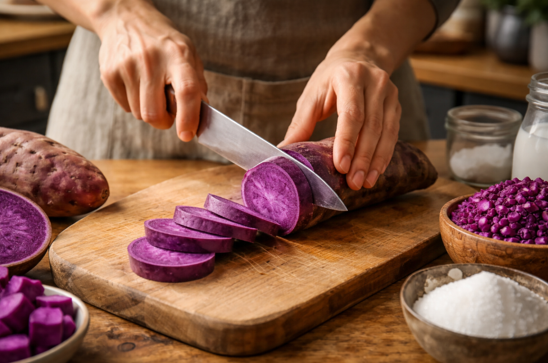
The easy answer sounds neat, though it misses the part most readers actually need. In strict culinary use, ube refers to the purple yam widely associated with the Philippines. In everyday English, purple yam may point to that same ingredient, yet the label is also used loosely enough to create real confusion with other purple tubers, especially purple sweet potato. That is why a recipe, a shop label, a food trend article and a social media post can all appear to describe the same thing while pointing to ingredients that behave differently once they reach the pan. For anyone trying to decide what to buy, the smartest approach is simple: treat purple yam as a broad market phrase, then look one level deeper. If the product clearly points to Dioscorea alata, you are much closer to authentic ube. If it points to a sweet potato variety, or gives no botanical clue at all, the flavour, starch level and texture may drift in another direction. Think of the shared purple colour as a matching coat, not a birth certificate. The colour draws them together, while the plant family and kitchen behaviour tell the fuller story.
What ube actually is?
Ube is best understood as the Filipino name most commonly associated with a purple-fleshed form of Dioscorea alata, a true yam rather than a sweet potato. That distinction matters because people often sort tubers by appearance alone. A deep violet interior suggests one category in the mind, though botany does not work that way. True yams belong to the Dioscorea group. Sweet potatoes belong to Ipomoea batatas. They may share a shelf, a colour family and a dessert menu, yet they do not come from the same plant line. When food writers say that ube is “a purple yam”, they are not using a marketing flourish. They are identifying the ingredient itself. In Philippine cooking, that ingredient is valued not only for colour, though also for its gently sweet, earthy and slightly nutty profile. Its purple tone comes from anthocyanins, the natural pigments behind many blue, red and violet foods. That explains why ube has become visually famous in cakes, halaya, ice cream, pastries and drinks. The striking colour is real, though the ingredient’s appeal goes further than appearance. It brings body, starch, aroma and a rounded flavour that sits somewhere between vanilla warmth, nuttiness and the familiar comfort of other starchy tubers. One more detail often gets lost in quick online explanations: not every Dioscorea alata tuber is intensely purple. Some forms are paler. Some regions grow varieties with different flesh colours. That means “ube” is not just shorthand for “anything purple inside”. It is a specific culinary identity attached to a yam species and, more narrowly, to the purple-fleshed forms celebrated in Filipino food culture. Once that point is clear, the rest of the confusion becomes easier to untangle.
Why the names get mixed up so often?
The confusion persists because language in food retail is rarely as strict as language in botany. A shopper wants something purple, mildly sweet and suitable for a dessert. A producer wants a label that feels familiar. A writer wants a phrase readers will recognise in two seconds. Those three pressures push labels towards the shortest possible wording, which is where problems begin. Purple yam sounds clear, though it may be used as a precise name for ube in one context and as a loose colour-based description in another. Add purple sweet potato, Okinawan sweet potato and even taro to the same visual world, and the market becomes a small maze dressed in violet. The result is not merely academic. It changes recipe outcomes. A powder sold under one name may bring a drier mash. A frozen purée under another may produce a silkier, more fragrant filling. Online photos make this worse because the camera flattens texture. Two ingredients can look like twins in a bright dessert shot while behaving like cousins with very different personalities once heated, mashed or baked.
The culinary rise of ube outside the Philippines has also played a role. As more cafés, bakeries and home cooks chased the dramatic purple shade, many readers met the ingredient through finished products rather than through the whole tuber. They saw the colour before they learned the plant. That is why people now ask whether ube, purple yam and purple sweet potato are all the same thing. The question makes sense. The labels invite it. Still, the careful answer is this: ube is a purple yam in the true yam family, while the phrase purple yam can be either precise or sloppy depending on who is using it. When the speaker is precise, the two may point to the same ingredient. When the speaker is casual, “purple yam” may blur into a category of purple tubers that includes lookalikes from a different botanical family. That is the crack in the door through which most kitchen confusion slips.
How to spot the difference in colour, aroma and texture?
If you want a practical answer rather than a textbook one, start with the three clues that matter most at home: colour, aroma and texture. Ube is known for its vivid purple flesh and for a flavour that reads as sweeter, nuttier and more aromatic than many people expect from a starch. The exterior tends to be rough and bark-like, which is one reason it is often described as more rugged than a sweet potato. When cooked and mashed, it can feel smooth, rich and slightly sticky in a pleasant way. By contrast, purple sweet potatoes, such as Okinawan or other purple-fleshed varieties, often cook up drier. Their sweetness can feel cleaner, more familiar, less perfumed. The difference is not always dramatic in a heavily sweetened cake or latte. It becomes much easier to notice in a plain mash, a simple filling or a baked piece tasted on its own.
Texture is where the divide often becomes decisive. A recent Puerto Rico yam guide notes that Dioscorea alata tends to have less fibre and more mucilage when cut than some other yam types, which helps explain why it can deliver a softer, silkier body in purées. Meanwhile, growers and food specialists discussing purple sweet potatoes often describe some varieties as drier, even chalkier if cooked too quickly or without enough time for the starches to soften properly. That means the mouthfeel can shift from lush to firm depending on which purple tuber you actually bought. Colour helps, though colour is not enough. Some ube is extremely vivid. Some is softer in tone. Some sweet potatoes also show intense purple flesh. So the best identification method is to combine the clues rather than rely on one. Look for the yam’s rougher exterior, notice whether the aroma leans earthy and nutty rather than simply sweet, then pay attention to the cooked texture. If it turns beautifully smooth with a full-bodied starchiness, you are likely close to true ube territory. If it stays comparatively dry or dense, you may have wandered into sweet potato country without realising it.
See also: The Life-Changing Benefits of Dental Implants: Function, Aesthetics, and Health
What changes once they reach the pan?
The reason this debate matters is not botanical pride. It is recipe performance. Ube and other purple tubers do not behave in exactly the same way once heat, sugar, fat and liquid enter the picture. A recipe is a chain reaction. Switch one link and the whole texture can tilt. That is why a baker trying to recreate a Filipino-style filling may feel disappointed even when the finished colour looks right. The eye says success. The spoon says something else. Ube’s appeal lies in the way its starch, moisture and aroma combine into a texture that can be lush, thick and dessert-friendly without becoming flat. Purple sweet potato can still produce lovely results, though it often steers the dish towards a drier or more straightforward sweetness. In plain terms, one ingredient can feel like velvet, the other more like a neatly pressed cloth. Both can work. They simply do not deliver the same finish.
In desserts
Desserts reveal the difference fastest because sugar does not erase an ingredient’s structure. It often magnifies it. In halaya-style preparations, ice cream bases, steamed cakes and enriched fillings, ube contributes both colour and identity. The flavour carries a gentle nutty quality with a mild vanilla-like warmth that makes it feel more rounded than colour alone would suggest. Its starch content helps create a soft, cohesive body, which is one reason it has become such a strong fit for creamy desserts. Research on purple yam pigments also shows why careful processing matters: methods such as steaming can help preserve the intense purple colour in yam flour, which explains why some commercial powders and purées perform much better than others. A dessert made with real ube therefore offers more than a purple appearance. It brings a specific aromatic and textural signature. Replace it with a purple sweet potato and the dessert may still be attractive, though the flavour can feel simpler and the texture a little less silky. That substitution is not a disaster. It is merely a different dessert wearing a familiar colour.
In savoury cooking
Savoury dishes expose another side of the difference. Roasted chunks, boiled pieces, mash, soup thickening and simple side dishes rely less on sugar to shape the final impression, so the natural character of the tuber comes forward. A drier purple sweet potato may roast beautifully and keep a firmer structure. Ube, depending on the variety and preparation, may lean softer and more yielding once cooked. That can be excellent for mashes, fillings or creamy soups, though less ideal if you want crisp-edged cubes that hold their shape with minimal effort. Some sweet potato specialists even recommend longer, slower cooking for certain purple sweet potato varieties to avoid a chalky interior and to bring out better flavour. That is a useful reminder that purple colour alone tells you very little about how a tuber wants to be cooked. In a savoury meal, the better choice depends on your target texture. If you want a plush mash or a smoother thickened base, ube has strong advantages. If you want a firmer roasted result, a purple sweet potato may be easier to manage. The plate can end up delicious either way, though it will not tell the same story.
Can one replace the other without anyone noticing?
Sometimes yes, often no. That is the honest kitchen answer. If the recipe uses a small amount of purple tuber mainly for colour, then a substitution may pass without much trouble. A pancake batter, a sponge with strong vanilla notes, a sweet drink or a frosting can hide some of the difference, especially if the tuber appears alongside coconut, dairy or sugar. Once the purple ingredient becomes central, the swap is easier to spot. The flavour changes. The texture shifts. The finished dish may still be good, though it will not taste like the version built around true ube. Readers often search for a clean rule here, so it helps to keep one in mind: substitute for colour with caution, substitute for identity only when you accept a different result. That single rule saves disappointment.
This matters even more in recipes tied to a cultural expectation. If someone says they are making an ube dessert, most readers imagine not just a purple hue but a particular flavour and softness associated with Filipino preparations. A purple sweet potato can imitate the look, though not always the same aroma or body. That is why many cooks now look for powders, frozen grated products or purées that clearly name ube or Dioscorea alata. They are not being fussy. They are trying to protect the core of the dish. At the same time, kitchen flexibility has its place. If you have only purple sweet potato and want to make a striking bake, use it. Just name it accurately and expect a slightly different outcome. Precision on the label is often the difference between a faithful recreation and a pleasant adaptation.
What to check when you shop, order or read a recipe?
The easiest way to avoid confusion is to read beyond the colour word. A smart shopper treats the packaging like a map. The key is not only the front label. It is the fine print, the product form and the context of the recipe. If the recipe comes from a Filipino cooking tradition and names ube, the intention is usually clear. If a shop sells a purple powder with no botanical detail, caution is sensible. If a café advertises a bright purple pastry, the colour alone tells you nothing about whether the ingredient is ube, purple sweet potato or a blend built for appearance. These are the labels and clues most worth checking:
- Ube
- Dioscorea alata
- Purple yam
- Ube powder
- Ube halaya
- Purple sweet potato
- Okinawan sweet potato
- Taro
That short list works because it forces the right question: am I looking at a true yam, a sweet potato, or simply a purple product sold under a broad name? Once you start reading labels that way, the category becomes much less slippery. The same method helps with recipes. If the writer focuses on Filipino desserts, yam purée, halaya or ube powder, you are likely in authentic ube territory. If the writer uses a general purple tuber language and the instructions resemble standard sweet potato handling, the recipe may be drawing from a different ingredient altogether. A little label discipline goes a long way here. It turns a trendy colour into a clear buying decision.
What this really means for your kitchen?
Ube and purple yam can mean the same ingredient when the wording is precise, especially when both point to Dioscorea alata. In real-world shopping and online food talk, the phrase purple yam is often broad enough to blur into other purple tubers, which is why the safest answer is not a flat yes or no. It is a careful “sometimes, though not always”. If your goal is authenticity, look for ube by name and, ideally, for a clear botanical reference. If your goal is simply a beautiful purple bake, other tubers may still serve you well. The important part is knowing which story your ingredient is telling before it reaches the plate. That small bit of clarity changes the whole recipe.