Artificial intelligence is moving fast, and the construction industry is not sitting on the sidelines. From automated scheduling tools to AI-powered design software, technology is changing how projects are planned, managed, and built. For most contractors and material suppliers, this sounds like good news — and in many ways, it is. But there is another side to this story that does not get talked about enough. The rapid rise of AI also brings a set of real challenges that builders across the United States will have to face in the near future.
The Pressure on Estimating and Bidding
One of the first areas where AI is creating pressure is in project estimating. Larger general contractors and national firms are already investing in AI-driven estimating platforms that can process drawings and generate quantity lists in a fraction of the time it used to take. This raises the bar for everyone.
Smaller contractors who still rely on manual methods or basic spreadsheets may find themselves bidding slower, missing scope items, or simply unable to compete on turnaround time. For those who have not yet explored professional construction material takeoff services, the gap between their process and the industry standard is about to grow wider. Speed and accuracy in estimating will become even more critical as AI pushes response expectations higher across the board.
Job Roles Are Shifting — Not Always Comfortably
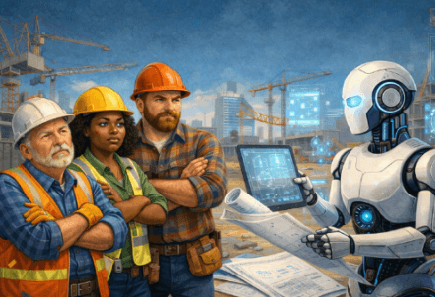
AI does not eliminate jobs overnight, but it does change what those jobs look like. Field superintendents are now expected to understand drone surveys and digital site models. Project managers are being asked to work inside platforms that use predictive analytics. Estimators need to verify AI-generated outputs rather than build takeoffs from scratch.
For experienced tradespeople and long-time construction professionals, this shift can feel unsettling. Decades of hands-on knowledge may not translate directly into the new digital workflows that AI demands. Training gaps are real, and the construction industry — which already faces a skilled labor shortage — will need to figure out how to bring its workforce along as technology accelerates.
Data Dependency and Cybersecurity Risks
AI systems run on data. The more a contractor uses AI tools, the more dependent they become on accurate, connected data flows between their estimating software, project management platforms, scheduling tools, and field systems. When that data is wrong, outdated, or breached, the consequences can ripple across an entire project.
Cybersecurity is not something most small and mid-size contractors think about daily, but it is becoming a real risk. As construction firms digitize more of their operations to keep up with AI-driven competitors, they also become more vulnerable to ransomware attacks, data theft, and system outages. The industry is playing catch-up on this front, and the costs of a serious breach can be devastating for a smaller firm.
Material Suppliers Face Their Own Disruptions
It is not just contractors who need to pay attention. Material suppliers are also feeling the effects of AI-driven changes in the construction pipeline. When AI tools help contractors build more accurate and detailed quantity lists early in the project cycle — something that professional construction takeoff services have long supported — procurement decisions happen faster and with more precision. Suppliers who are not integrated into digital ordering platforms or who cannot respond quickly to data-driven purchase requests may find themselves losing business to competitors who can.
On the flip side, AI-driven demand forecasting is giving larger distributors a significant edge in inventory management. Smaller, regional suppliers without access to these tools may struggle to stay competitive on pricing and availability.
See also: How Odoo Development Services Improve Business Efficiency?
Staying Competitive Without Losing What Works
None of this means contractors and suppliers need to abandon what has made them successful. Relationships, craftsmanship, site experience, and local knowledge still matter enormously in this industry. AI cannot replace a superintendent who knows how to solve a drainage problem on a tight urban site, or a supplier who delivers on time because they have built trust over years.
The challenge is integrating new tools without losing those strengths. Contractors who selectively adopt AI where it genuinely helps — estimating, scheduling, safety monitoring — while keeping their core expertise intact will be the ones who come out ahead.
Final Thought
The AI wave in construction is not coming — it is already here. The builders, contractors, and suppliers who acknowledge the difficulties it brings, rather than ignoring them, will be far better positioned to adapt. The near future will reward those who are honest about their gaps and proactive about closing them.
Plan for the change now, while there is still time to do it on your own terms.