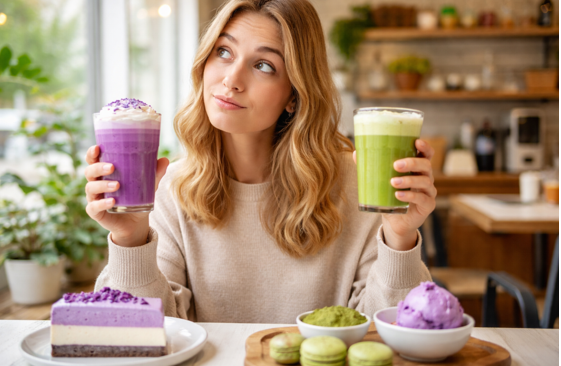
Some drinks and desserts catch the eye before they reach the tongue. That is exactly why ube and matcha are so often compared. One brings a vivid purple shade and a naturally sweet, mellow profile linked to purple yam. The other offers a deep green colour, a grassy aroma and the fine bitterness of powdered green tea. They often appear in lattes, cakes, ice creams and café menus, which can make them seem similar at first glance. Yet they come from very different plants, carry different culinary roles and create very different tasting experiences. People searching for the difference between ube vs matcha usually want a simple answer that goes beyond colour alone. They want to know which one tastes sweeter, which one feels more earthy, which one works better in baking, which one contains caffeine, which one fits a comforting drink, which one feels more versatile in desserts. That comparison matters because choosing the wrong one can change the whole balance of a recipe, much like picking velvet when you expected linen. The look may impress in both cases, though the sensory result is not the same. This article explains the key distinctions with precision. You will see where ube comes from, how it differs from matcha in flavour, colour, texture and preparation, how each ingredient behaves in food and drink, what their nutritional profiles generally suggest, plus how to decide which one is right for your preference. If your goal is to understand the subject clearly without vague wording or filler, you are in the right place.
Ube and matcha do not come from the same ingredient family
One of the most important facts to understand is that ube and matcha are not two versions of the same trend, nor are they close botanical cousins. Ube is a purple yam, widely associated with Filipino cuisine, known for its naturally violet flesh and its sweet, soft, slightly nutty character. It belongs to the world of root vegetables and tubers. Matcha, by contrast, is a finely ground green tea powder made from specially grown tea leaves. It belongs to the tea family, not the vegetable family. That single distinction already explains why their flavour, nutritional makeup and typical uses diverge so strongly.
When people first encounter ube in desserts or drinks, they sometimes assume it is mainly a flavouring or colouring agent created to imitate taro or sweet potato. In reality, ube has its own identity. It is usually cooked, mashed, turned into halaya, blended into spreads, used in cakes, folded into ice cream, whisked into lattes or baked into pastries. Its role is often closer to a naturally sweet, creamy base ingredient. Matcha behaves very differently. It is sifted, whisked, dissolved or blended in measured amounts because it is concentrated, grassy and slightly bitter. It acts less like a starchy base and more like a powerful flavour element.
This botanical gap has practical consequences. A yam brings body, softness and a mild sugary note. A powdered tea leaf brings tannic depth, vegetal notes and a more astringent finish. That is why asking “which is better, ube or matcha?” is not really the right question. A more useful question is: what do you want from the ingredient? If you want creaminess, dessert warmth and a rounded sweetness, ube often makes more sense. If you want freshness, light bitterness, café-style complexity and tea character, matcha fits better. They may both be fashionable, yet their foundations could hardly be more different.
Origin also shapes expectation. Ube is deeply rooted in Southeast Asian and especially Filipino food culture, where it has long been used in traditional sweets. Matcha is strongly tied to Japanese tea culture, preparation rituals and confectionery. So, even before taste enters the conversation, ube vs matcha is already a comparison between two cultural and culinary traditions with different histories, methods and textures. Seeing them as equivalent simply because both look vibrant on social media misses the real substance of the comparison.
The flavour profile of ube is sweeter, softer and more dessert-like
If your main question is about taste, the clearest answer is this: ube usually tastes sweet, mellow and creamy, while matcha tastes earthy, grassy and slightly bitter. Ube often carries notes that people describe as vanilla-like, nutty or gently reminiscent of sweet potato, though smoother and more fragrant. Its flavour is approachable. It does not usually hit the palate with sharp intensity. Instead, it opens in a rounded way, making it popular in cakes, jam-like spreads, milk-based drinks and frozen desserts.
Matcha creates almost the opposite impression. High-quality matcha can feel smooth, rich and umami-led, though it still tends to keep a clear vegetal edge. Lower-quality matcha often leans more bitter, more astringent and sometimes more aggressive on the tongue. That does not make it worse. It simply means it answers a different craving. Matcha is appreciated for its depth, its slight dryness, its green freshness and the way it cuts through milk, sugar and cream. Ube, by comparison, tends to blend into recipes like a soft cushion, while matcha behaves more like a fine blade.
This is why people who enjoy sweet drinks often gravitate towards ube first. An ube latte can feel comforting, smooth and easy to like even for someone with no previous exposure to the ingredient. A matcha latte often requires a taste for green tea or at least some openness to herbal bitterness. Sugar and milk can soften that edge, though the core profile remains recognisable. For a dessert menu, ube tends to signal indulgence and warmth. Matcha signals complexity and freshness. Neither is inherently superior. They simply move in different flavour directions.
Texture perception also affects flavour. Ube preparations can feel velvety and dense because the yam itself contributes body. Matcha powder, unless handled well, can feel lighter or slightly chalky, especially in drinks that are not whisked properly. That changes how the palate interprets sweetness and aroma. In practical terms, if someone says, “I want a flavour that feels cosy and naturally dessert-friendly,” ube is often the better answer. If they say, “I want something greener, cleaner and more layered,” matcha is usually the better fit.
Colour may be the first thing you notice, though it tells only part of the story
The visual contrast between these two ingredients is striking. Ube is purple, ranging from lilac to deep violet depending on the preparation, concentration and any added ingredients. Matcha is green, from bright jade to darker moss-like tones depending on grade, freshness and storage. Those colours are one reason both ingredients have become highly visible in cafés, bakeries and social media content. They catch attention quickly. Still, colour should not be mistaken for flavour strength, sweetness or nutritional value.
With ube, the purple shade often suggests sweetness before the first sip or bite. That expectation is usually reinforced by the recipes in which it appears: cakes, doughnuts, cookies, cheesecake, ice cream or sweet drinks. With matcha, green tends to suggest freshness, plant notes and a more adult flavour profile. Even before tasting, the eye starts preparing the mouth for two different experiences. This visual cue matters because food choices are rarely based on flavour alone. People choose with their eyes, their habits and their expectations. Ube often looks playful and rich. Matcha often looks clean and refined.
Yet appearance can mislead. Some ube products rely on colouring or artificial flavouring rather than a generous amount of actual yam, which means the vibrant purple can promise more than the taste delivers. Matcha products face a similar issue. A bright green dessert does not always contain a meaningful amount of quality matcha. In both cases, colour can act like theatre curtains: impressive when they open, though not always a guarantee of what the performance will be. That is why ingredient quality still matters far more than visual appeal.
In home cooking and product selection, understanding this point helps avoid disappointment. A naturally made ube product should not only look purple; it should also carry that soft, rounded yam character. A well-made matcha product should not only look green; it should preserve tea depth and aroma rather than tasting only of sugar or milk. So yes, colour is part of the charm. It is not the deciding factor when comparing ube vs matcha. Taste, texture, preparation and purpose remain much more useful benchmarks.
Matcha contains caffeine, while ube is chosen more for flavour and texture
One of the most practical differences between ube and matcha is their effect in daily use. Matcha naturally contains caffeine because it is made from green tea leaves. Ube does not function as a caffeinated ingredient in the same way. That means the choice between the two is not just culinary. It can also be about energy, timing and personal tolerance. Someone looking for a morning drink or an afternoon pick-me-up may prefer matcha. Someone looking for a comforting evening treat may lean towards ube.
That distinction often shapes buying habits. Matcha has become popular with people who want an alternative to coffee, a more gradual-feeling lift, or a ritual drink that can be prepared hot or iced. Ube appears more often as a flavour-led choice, especially in sweet menus. An ube latte may contain coffee if the café adds espresso, though the ingredient itself is not the stimulant. A matcha latte brings its own tea-based caffeine profile from the start. For many readers, this is one of the clearest answers to the question of difference.
From a nutritional point of view, the comparison is also uneven because these ingredients are not used in the same quantities or forms. Matcha is concentrated powdered tea, usually used in small amounts. Ube is a yam, often incorporated in larger quantities as puree, paste or cooked flesh. Nutritional values depend heavily on recipe context: sugar, milk, cream, syrups and toppings can change the final result more than the headline ingredient alone. That is why it is risky to reduce the comparison to a simplistic “which is healthier?” approach.
What can be said with confidence is that matcha is generally chosen for both flavour and function, while ube is generally chosen for flavour, texture and visual appeal. If you want an ingredient that brings ritual, tea notes and stimulation, matcha has a clear edge. If you want an ingredient that creates softness, sweetness and a more indulgent mouthfeel, ube usually stands out. The better option depends less on trend and more on what role you want the ingredient to play in your day.
See also: The Life-Changing Benefits of Dental Implants: Function, Aesthetics, and Health
Which one works better in drinks, desserts and everyday recipes?
When people compare ube vs matcha, they are often trying to decide which one fits best into their own routine. That is where usage matters more than trend. Ube works beautifully in desserts because it brings colour, a naturally rounded sweetness and a texture that feels full rather than sharp. It slips easily into cakes, sponge rolls, cheesecakes, biscuits, pancakes, ice cream, mousse and sweet breads. In many recipes, it behaves like a flavour with structure. It does not merely season the dish. It helps build the body of the final result. That makes it highly useful in baking, where the ingredient needs to contribute something visible, tasty and textural at the same time.
Matcha works across desserts and drinks too, though its behaviour is more precise. It is less forgiving when poorly measured. Too little and it disappears behind milk or sugar. Too much and it can become bitter or dry. Still, in the right amount, it brings a very distinctive finish to lattes, sponge cakes, cookies, tiramisu-style desserts, pancakes, custards and frozen treats. Its strength lies in contrast. It cuts through cream, balances sweetness and gives recipes a more grown-up profile. Ube tends to melt into a dessert like soft velvet. Matcha tends to define the edges.
Where ube usually stands out
Ube tends to shine when the goal is comfort, softness and a flavour that feels immediately welcoming. In a latte, it can taste creamy and dessert-like even without much complexity. In a cake, it offers a purple crumb that feels original without tasting strange or overly intense. In ice cream, it often comes across as mellow, slightly nutty and naturally rich. That makes it especially appealing for people who want something different from chocolate, vanilla or strawberry, though not something bitter or challenging. It is also a strong option for households where the ingredient needs to please a wide range of tastes.
There is also a practical side to this. Because ube leans sweet and smooth, it is easier to pair with familiar ingredients such as condensed milk, coconut, cream, butter and white chocolate. It can turn a simple dessert into something memorable without demanding a dramatic shift in flavour preferences. For cafés and home bakers alike, that makes it commercially and creatively attractive. The ingredient offers colour and character, though it still feels accessible.
Where matcha usually stands out
Matcha comes into its own when a recipe needs lift, contrast and a cleaner finish. In drinks, it offers a recognisable tea backbone that survives milk and sweetener. In desserts, it balances sugar rather than simply sitting beside it. A matcha cake can feel lighter on the palate than a very sweet sponge. A matcha cream filling can stop a pastry from becoming cloying. That is one reason matcha has remained so popular beyond short-lived food trends. It brings identity. Even a small amount can change the tone of a recipe.
Its flexibility also reaches beyond desserts. Matcha can be used in smoothies, yoghurt bowls and even savoury contexts in more experimental kitchens. Ube is more closely associated with sweet applications, though there are exceptions. If your main interest lies in café drinks, energy-based routines and flavours with some bitterness, matcha generally offers more range. If your interest lies in indulgent bakes, colourful treats and sweet comfort, ube is often the easier winner.
- Sweetness
- Bitterness
- Texture
- Caffeine
- Baking
- Lattes
How to choose between ube and matcha according to your taste
The easiest way to choose is to ignore hype and focus on preference. Ask yourself what you want your drink or dessert to do. If you want it to feel soft, creamy, sweet and naturally indulgent, ube will usually make more sense. If you want it to feel fresh, earthy, layered and slightly stimulating, matcha is usually the stronger candidate. This is not a small detail. A person who dislikes bitterness may keep trying matcha products and feel underwhelmed every time, simply because the flavour profile does not match their palate. Another person may try ube and find it pleasant, though too gentle for what they wanted.
It also helps to think about context. For breakfast or a mid-morning ritual, matcha often fits better because its tea character and caffeine make it feel purposeful. For an afternoon treat, a bakery visit or a dessert menu, ube often feels more natural. In a home kitchen, the decision may come down to your confidence with the ingredient. Ube is usually more forgiving in sweet recipes. Matcha rewards precision. Neither one should be chosen only because the colour looks attractive on a screen. That is where many disappointments begin.
Another useful question is whether you want the ingredient to be the star or the accent. Ube can carry a dessert more easily as the main flavour because it has body as well as taste. Matcha can lead or accent, though it often works best when the rest of the recipe gives it room to breathe. White chocolate, milk, cream and vanilla can support it well. Heavy sweetness can flatten it. Ube, on the other hand, often welcomes richness and can sit comfortably with it.
So when someone asks, “Which is better, ube or matcha?”, the most honest answer is that the better choice depends on what kind of eating or drinking experience they want. One offers warmth and softness. The other offers clarity and edge. One feels like a gentle cushion. The other feels like a crisp line of ink. That difference is exactly why both ingredients have earned loyal fans.
Is ube healthier than matcha, or is that the wrong question?
This question appears often, though it can be misleading if it is framed too simply. Matcha and ube are not equivalent ingredients used in equivalent ways, so a direct health ranking rarely tells the full story. Matcha is typically consumed in small measured amounts, often in drinks. Ube is usually eaten as part of a dessert, a spread, a puree or a baked preparation. The final nutritional impact depends heavily on how each one is served. A sweetened matcha latte topped with syrup is not nutritionally identical to pure matcha whisked with water. An ube cake or ice cream is not nutritionally identical to cooked purple yam used more simply.
That is why the better lens is function rather than labels. Matcha is often chosen by people looking for tea-based energy, ritual and a more plant-forward taste. Ube is often chosen by people looking for satisfaction, flavour and visual appeal in sweet food. If someone is interested in reducing sugar, watching caffeine or choosing ingredients for a very specific dietary routine, the surrounding recipe matters more than the headline word on the menu. It is wiser to ask: how is this prepared, what has been added, how large is the portion, what role does it play in my day?
Used sensibly, both ingredients can have a place in a balanced lifestyle. Still, they answer different needs. Matcha belongs more naturally to the language of tea and daily beverages. Ube belongs more naturally to the language of desserts and comforting treats. Comparing them without that context is like comparing a herb with a root vegetable and expecting a neat winner. The categories overlap in café culture, though their real uses remain quite distinct.
A simple way to remember the difference
Ube is a purple yam with a sweet, creamy and dessert-friendly profile. Matcha is powdered green tea with an earthy, grassy and slightly bitter character. One is usually chosen for softness, colour and indulgent recipes. The other is usually chosen for tea depth, caffeine and a fresher finish. If you like mellow sweetness and bakery-style comfort, ube will probably speak to you more easily. If you enjoy green tea notes and a more layered drink or dessert, matcha may suit you better. The most useful choice is not the one that looks best online, but the one that matches your palate. Which side sounds closer to yours?