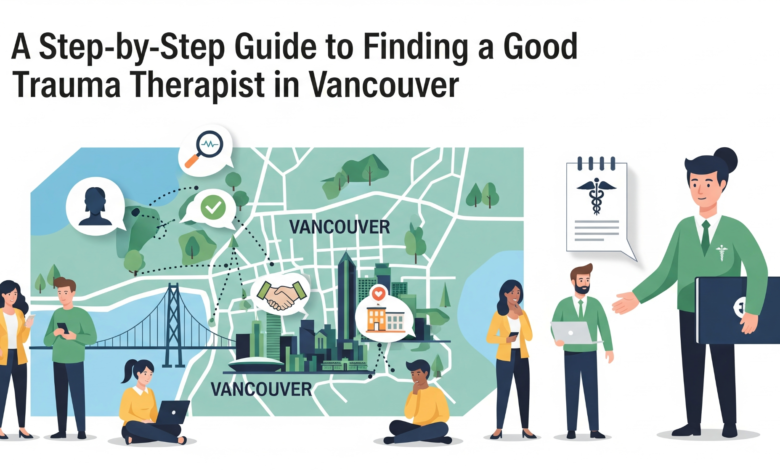
Looking for a trauma therapist can feel overwhelming. There are many options in Vancouver. How do you know who is right for you?
This guide breaks it down into clear steps. It explains what to look for and what questions to ask before taking Trauma counselling Vancouver. This helps you find a therapist who is skilled and a good fit for you.
First, Know the Basics: Credentials and Specialization
In British Columbia, “therapist” or “counsellor” are not protected titles. This means anyone could use them. You need to check their official credentials yourself.
Look for Specific Credentials
A therapist should be registered with a professional body. This means they have proper education and follow ethical rules. In Vancouver, common credentials are:
- Registered Clinical Counsellor (RCC): Member of the BC Association of Clinical Counsellors (BCACC).
- Registered Social Worker (RSW) or Registered Clinical Social Worker (RCSW): Member of the BC College of Social Workers.
- Registered Psychologist (R.Psych): Member of the College of Health and Care Professionals of BC.
Check if their credential is current. You can often verify this on the association’s website.
Seek a Trauma Specialist, Not Just a Generalist
A therapist might be qualified, but that doesn’t mean they are a trauma expert. Trauma therapy uses specific, advanced methods. You should look for someone who lists trauma as a core specialty.
Think about your specific needs too. Do you want help with recent trauma, childhood trauma, or complex PTSD? Some therapists focus on particular areas. Look for this in their bio or website.
| What to Look For | Why It Matters | What to Ask or Check |
| Official Credential | Ensures minimum standards of education, training, and ethics. It’s your first filter. | “Are you a Registered Clinical Counsellor (RCC), Psychologist, or Clinical Social Worker?” Check their bio or a professional directory. |
| Trauma-Specific Training | General therapy skills are not enough for trauma. Specialized training is crucial. | “What formal training do you have in trauma therapy?” Look for names of specific models they use. |
| Experience with Your Concerns | A therapist experienced with your type of trauma will understand your situation better. | “How much of your practice is dedicated to trauma therapy?” Mention your specific concerns (e.g., childhood trauma, accident, assault). |
| A Good Personal Fit | Your comfort and trust in the therapist is the biggest factor in successful therapy. | Trust your gut feeling during a consultation. Do you feel heard, safe, and respected? |
Key Questions to Ask a Potential Therapist
Many therapists offer a free 15-20 minute consultation. Use this time to ask questions. Here are five important ones based on expert advice:
- “What is your formal training in trauma therapy?” Listen for names of specific, evidence-based models. Common ones include EMDR (Eye Movement Desensitization and Reprocessing), Somatic Experiencing, Sensorimotor Psychotherapy, or Internal Family Systems (IFS).
- “Do you use this as a full therapy model or just as a technique?” You want someone who uses an integrated, structured approach to trauma, not just isolated techniques.
- “What are the key steps in your approach?” A good trauma therapist will follow a phased model. The first phase should always focus on safety and stabilization before processing traumatic memories.
- “How much of your current practice is trauma therapy?” An experienced specialist will likely be working with trauma clients regularly.
- “Do you receive regular consultation or supervision?” This shows the therapist is committed to their own professional growth and ethical practice.
Practical Checklist for Your Search
- Clarify Your Goals: What do you want from therapy? Is it to reduce flashbacks, feel less anxious, or improve your relationships? Knowing this helps you search.
- Use Trusted Directories: Search on sites like Psychology Today, First Session, or the BC Association of Clinical Counsellors (BCACC) directory. You can filter for location, specialty, and credentials.
- Consider Logistics:
- Cost: Sessions in Vancouver typically cost between $125 and $300. Ask about fees and if they offer sliding scales.
- Insurance: Check if your extended health plan covers counselling. Ask if the therapist provides receipts for reimbursement.
- Format: Do you want in-person or online (virtual counselling)? Both can work for trauma.
- Availability: Do their hours work for your schedule?
- Read Their Online Presence: Look at their website or profile. It can tell you about their approach, values, and personality.
- Schedule Consultations: Talk to 2-3 therapists if you can. Compare how you feel with each one.
FAQs About Finding a Trauma Therapist in Vancouver
What’s the difference between a trauma counsellor and a trauma specialist?
A trauma specialist has advanced, certified training in specific trauma therapies like EMDR or Somatic Experiencing. A counsellor may have general training in trauma-informed care. Always ask about their specific training.
How long does trauma therapy take?
It varies. Some people see progress in a few months. Others may need longer-term therapy for complex trauma. Your therapist should discuss this with you.
What if my trauma is affecting my relationship?
This is common. You might benefit from individual trauma counselling and later, or simultaneously, from couples counselling Vancouver to help your partner understand and improve communication.I struggle with anxiety and perfectionism from past trauma.
Can a therapist help with both?
Yes. A trauma-informed therapist can address the root causes. They understand how trauma drives issues like anxiety counselling and perfectionism counselling.
Are there low-cost options in Vancouver?
Yes. Some community clinics, non-profits, and university training clinics offer lower-cost services. Some private therapists also offer sliding scale fees based on income.
Final Thoughts
Finding the right therapist takes effort. But it is worth it. Focus on proper credentials, specialized trauma training, and your personal comfort.
Openspace Counselling in Vancouver has therapists who specialize in trauma. They offer a safe space to heal from painful experiences. You can book a free consultation to see if they are a good fit for you.