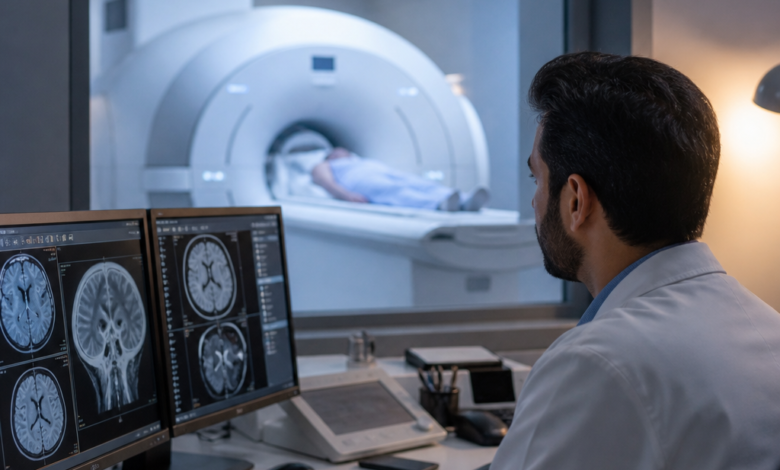
Neurological conditions are among the most complex and consequential health challenges a person can face. From persistent migraines and unexplained memory lapses to more serious concerns like stroke or brain tumors, the path to accurate diagnosis often begins with one critical step: advanced brain imaging. In Abu Dhabi, access to world-class neuroradiology services has transformed how patients receive care, enabling clinicians to detect, monitor, and treat neurological disorders with unprecedented precision. Understanding what brain imaging involves, when to seek it, and where to find the most qualified specialists is essential knowledge for anyone navigating neurological health concerns in the region.
What Is Neuroradiology and Why Does It Matter?
Neuroradiology is a subspecialty of radiology focused on diagnosing and characterizing diseases of the central and peripheral nervous system, spine, head, and neck using imaging technologies. Unlike general radiology, neuroradiology demands a highly specialized skill set, as the brain and spinal cord present unique anatomical complexities that require expert interpretation. A misread scan or an overlooked anomaly can have serious consequences for a patient’s treatment plan and long-term prognosis.
The tools of neuroradiology include Magnetic Resonance Imaging (MRI), Computed Tomography (CT), functional MRI (fMRI), MR angiography, and diffusion tensor imaging, among others. Each modality serves a distinct diagnostic purpose. For example, fMRI maps brain activity in real time, making it invaluable before neurosurgical procedures, while MR angiography visualizes blood vessels to detect aneurysms or arteriovenous malformations. The sophistication of these technologies means that the expertise of the radiologist interpreting the results is just as important as the equipment itself.
Common Conditions Diagnosed Through Brain Imaging
Brain imaging is not reserved solely for emergencies. While it plays a critical role in acute situations such as stroke assessment, it is equally important in the diagnosis and ongoing management of a wide range of conditions. These include:
Stroke and Cerebrovascular Disease
Time is brain tissue when it comes to stroke. Advanced CT perfusion imaging and MRI diffusion-weighted sequences can identify ischemic stroke within minutes, allowing clinicians to make rapid treatment decisions. Neuroradiologists play a pivotal role in determining whether a patient is eligible for thrombolytic therapy or mechanical thrombectomy, interventions that can mean the difference between full recovery and permanent disability.
Brain Tumors and Lesions
Detecting and characterizing brain tumors requires more than identifying a mass. Neuroradiologists assess tumor grade, vascularity, surrounding edema, and proximity to eloquent brain regions. This information directly informs surgical planning, radiation therapy targeting, and chemotherapy protocols. Spectroscopy and perfusion imaging can even help differentiate between tumor recurrence and treatment-related changes, a distinction that significantly impacts patient management.
Neurodegenerative Disorders
Conditions like Alzheimer’s disease, Parkinson’s disease, and multiple sclerosis leave distinct imaging signatures that trained neuroradiologists can identify. Early detection through imaging allows for earlier intervention, which is increasingly important as disease-modifying therapies become available. Volumetric brain analysis and white matter lesion mapping are among the tools used to track disease progression over time.
The Importance of Accreditation in Neurological Care Settings
When choosing a facility for brain imaging or any neurological procedure, accreditation should be a primary consideration. Accredited institutions are held to rigorous standards of patient safety, clinical quality, and operational excellence. For patients seeking specialized neurological care, whether in the Middle East or internationally, understanding the accreditation landscape helps ensure they receive care that meets globally recognized benchmarks. The Joint Commission’s standards for ambulatory health care and surgery centers provide a useful reference point for evaluating the quality and safety of specialized medical facilities worldwide.
Patients who are exploring options across different healthcare systems may also find it helpful to review how private surgical and diagnostic centers operate in other countries. A detailed look at private surgery clinics in Calgary, including their services, costs, and quality standards, illustrates how internationally minded patients can benchmark care quality across borders when making informed healthcare decisions.
When Should You See a Brain Imaging Specialist?
Many patients are referred to neuroradiology through their neurologist or primary care physician, but it is worth knowing the warning signs that should prompt a timely referral. These include sudden or severe headaches unlike any previously experienced, unexplained changes in vision, speech, or coordination, new-onset seizures, progressive cognitive decline, and any head or neck trauma with neurological symptoms. In children, developmental delays or unexplained behavioral changes may also warrant neuroimaging evaluation.
It is equally important to understand that brain imaging is not a one-size-fits-all process. The appropriate modality, protocol, and level of specialist involvement depend on the clinical question being asked. A skilled neuroradiologist does not simply operate a machine; they collaborate with the referring clinician to design the most informative imaging study and then provide a detailed, clinically actionable interpretation.
Cleveland Clinic Abu Dhabi: A Center of Neuroradiology Excellence
For residents and visitors in the UAE seeking expert neurological imaging, Cleveland Clinic Abu Dhabi stands as a benchmark institution. The neuroradiology department is staffed by fellowship-trained specialists who bring international expertise to every case. The facility is equipped with state-of-the-art imaging technology, including high-field MRI systems and advanced CT platforms, enabling the full spectrum of neurological imaging protocols. Consulting a brain imaging specialist abu dhabi at Cleveland Clinic Abu Dhabi means accessing a multidisciplinary team that integrates neuroradiology findings into a comprehensive care plan, whether the patient requires neurosurgery, oncology, or rehabilitation services.
The institution’s commitment to quality is reflected not only in its technology and personnel but also in its culture of continuous improvement and patient-centered care. Cases are regularly reviewed in multidisciplinary tumor boards and neurovascular conferences, ensuring that imaging findings are interpreted in the full context of each patient’s clinical picture. This collaborative model is particularly valuable for complex or rare neurological conditions where a second set of expert eyes can make a meaningful difference.
Preparing for Your Brain Imaging Appointment
Patients scheduled for neuroimaging can take several steps to ensure the process goes smoothly. Inform your care team of any implanted devices such as pacemakers or cochlear implants, as these may affect MRI eligibility. Disclose all medications and any history of allergic reactions to contrast agents. Arrive with a clear summary of your symptoms and any prior imaging studies, as comparison with previous scans is often diagnostically valuable. If you experience claustrophobia, discuss this with your provider in advance, as sedation or open MRI options may be available.
Conclusion
Brain imaging is far more than a diagnostic tool — it is the foundation upon which effective neurological care is built. The quality of the imaging study and the expertise of the specialist interpreting it can profoundly influence a patient’s treatment trajectory and quality of life. In Abu Dhabi, patients have access to neuroradiology services that rival the best in the world, combining advanced technology with the clinical depth of internationally trained specialists. Whether you are managing a known neurological condition or seeking answers to unexplained symptoms, engaging with a qualified brain imaging specialist is a decision that can genuinely change the course of your health journey.