PC gaming or console in 2026? What to choose depending on budget, experience and way of playing

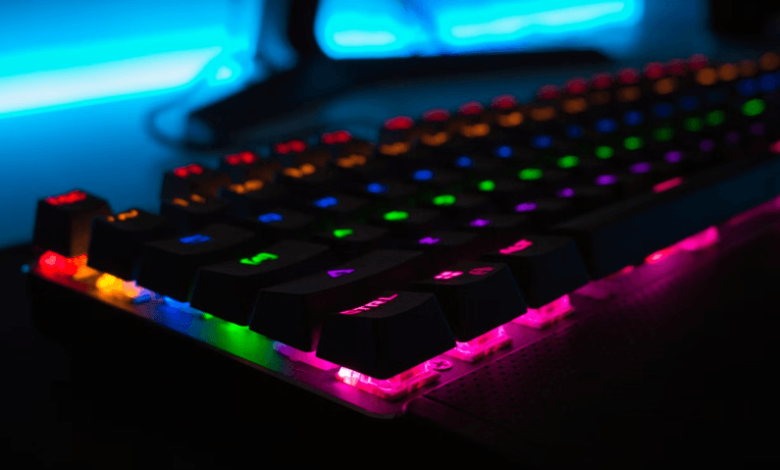
Choosing between a gaming PC and a console in 2026 is no longer as straightforward a decision as it was a few years ago. The computer still offers great freedom, more potential power, access to extremely broad catalogues and a very flexible lifespan; the console, for its part, allows you to play with a more contained initial investment, fewer technical complications and an optimised experience from the very first minute. In a context marked by the rising cost of components such as graphics cards, RAM and SSDs, the question would instead be which platform best fits each player, each budget and each expectation.
The change of scenario
PC gaming has always been the top choice for those who want to play at maximum performance. It allowed you to choose every component, update parts over the years, adjust graphics precisely and access digital stores with very intense price competition. However, in 2026, the context is different.
Building a PC for gaming has become more expensive. Graphics cards remain in a high price bracket, RAM has gone up, and SSDs, which until recently were one of the most affordable parts of the setup, have also increased in cost. This means that the old argument of “I’ll build myself a PC and play everything better for less money” is no longer as universal as before.
There is also pressure from other markets, not just the gaming market. The need for memory and chips in data centres, artificial intelligence, and advanced computing affects the availability and cost of many PC parts.
That is why PC gaming remains an excellent platform, but its economic appeal depends much more than before on the user’s profile. Those who already have a usable base can update it. Those starting from scratch, however, need to calculate in detail.
The console retains its great trump card
Compared with the PC, the console has the virtue that you buy the device, connect it to the television, install the game and play. There is no need to compare motherboards, power supplies, coolers, compatible memories or minimum requirements. Nor do you have to worry about whether a specific title performs better with one GPU brand or another, whether the drivers are up to date or whether it is advisable to reduce shadows, textures or ray tracing to stabilise the frame rate.
Platforms such as PlayStation 5, PlayStation 5 Pro and Xbox Series X continue to centre their proposition on the balance between performance, catalogue and ease of use. Sony highlights that PS5 Pro can run compatible games at 60 fps or up to 120 fps, with 4K output, ray tracing and upscaling via PSSR in titles prepared to take advantage of it. Microsoft, for its part, promotes Xbox Series X as a console geared towards 4K gaming, with up to 120 fps, Xbox Velocity Architecture, fast loading times and features such as Quick Resume.
This does not mean that a console is always as powerful as a PC. A high-end computer can clearly surpass any console in resolution, refresh rate, graphic quality, mods, multitasking and versatility. But the fair comparison should not be made against a €2,000 or €3,000 PC, but against what an average player is willing to invest.
The real budget
With a console, the entry cost is usually easier to calculate: machine, included controller, perhaps a subscription, some games and, if needed, additional storage. On PC, the calculation can include much more, such as the tower, monitor, keyboard, mouse, headphones, operating system, controller, chair, and peripherals, as well as future updates.
The PC can indeed offset part of that investment with frequent offers, various digital stores, bundles, temporary free games and compatibility with old libraries. In addition, a computer is useful for many more tasks such as studying, working, editing video, programming, creating content, playing at the best online casino, streaming or managing projects. That versatility can justify a higher investment when the equipment is not bought solely for gaming.
Performance: raw power versus optimisation
The PC can scale much higher than a console. If the budget allows, it is possible to play at 1440p with very high settings, at 4K with advanced settings, on ultrawide monitors, with refresh rates above 144 Hz, and with increasingly sophisticated upscaling technologies.
Likewise, the PC also lets you choose between different priorities: more FPS in competitive games, higher visual quality in narrative adventures, lower latency in shooters, or balanced configurations for playing and broadcasting.
The console plays a different game. Its power is fixed, but developers know exactly what hardware they have in front of them. That uniformity allows for very carefully handled optimisations, performance and quality modes, reduced loading times and a fairly stable experience. In many games, the user only has to choose between “quality” and “performance”, without browsing through dozens of graphics options.
The smartest decision is to choose by habits, not by labels
The conversation between PC gaming and console gaming tends to be charged with passion, but in 2026, it is important to approach it pragmatically. The PC is not automatically the superior option for everyone, even though it can reach the highest technical level. The console is not a lesser alternative, even though it has less configuration freedom. Both respond to different needs.
The key is to observe how one really plays. How many hours a week, which genres are of interest, whether one plays alone or with others, whether keyboard and mouse are valued, whether equipment is needed for work, whether one wants to play on the sofa, whether one feels like tinkering with settings or prefers a closed, stable experience. Those who understand that difference will be able to choose better, without being carried away solely by teraflop comparisons, graphics card prices or community debates. The best system is not the one that wins on paper; it is the one that fits the way each person enjoys playing.