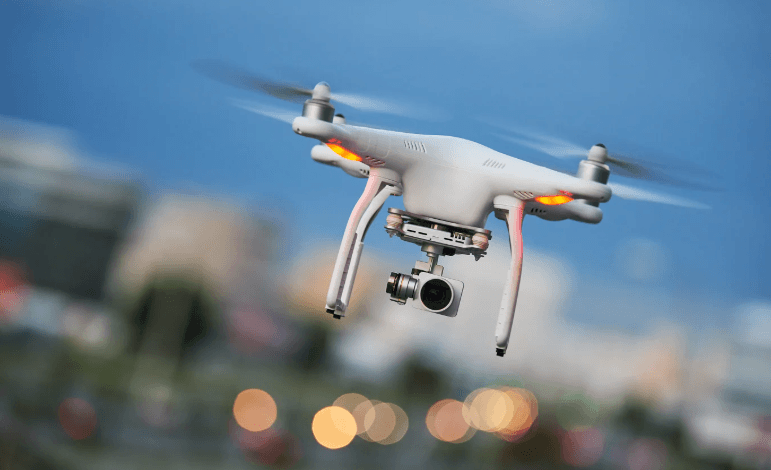
For most of the last decade, physical security meant controlling who walked through a door. Access cards, biometric gates, CCTV systems, and perimeter fencing were the primary tools of the trade, and for most facilities they were sufficient. That calculation has shifted. The widespread availability of consumer and commercial drones has created a new attack surface that traditional security infrastructure is simply not designed to address.
Facilities that once focused entirely on ground-level perimeter protection now face the reality that a threat can approach from above, silently and at speed, with no footprint on any access control log.
What Drone Threats Actually Look Like in Practice
Unauthorized drone activity around secured facilities falls into several categories, each with different risk profiles. Surveillance is the most common, with drones used to observe personnel movements, map facility layouts, or gather intelligence in advance of a more direct intrusion. Contraband delivery is a growing concern for correctional facilities, military sites, and border areas. More serious scenarios involve drones used as delivery platforms for disruptive or destructive payloads.
Beyond intentional threats, the regulatory environment around drone flight has created a different category of risk: reckless or uninformed civilian drone operation near airports, stadiums, hospitals, and energy infrastructure. Whether the operator is malicious or simply unaware, the consequences of a near-miss incident in these environments can be severe.
How Drone Detection Systems Work
The core function of a detection system is identification and classification. Reliable Drone Detection Systems use a combination of radio frequency sensing, acoustic detection, radar, and optical tracking to identify UAVs operating within a defined perimeter. When a drone is detected, the system classifies it by type and trajectory, alerting operators in real time so they can assess the threat level and initiate an appropriate response.
More advanced deployments integrate countermeasure technology that can disrupt a drone’s control signal, forcing it to land or return to its operator, without creating collateral risk to other systems in the area. This counter-drone capability is increasingly being deployed at government buildings, critical infrastructure sites, and large public events.
The Importance of Layered Security
Physical access control and drone detection are not competing technologies. They address different vectors and work best when deployed as part of a unified security strategy. A building with state-of-the-art access gates but no aerial monitoring has a gap that a basic commercial drone can exploit in minutes. Similarly, counter-drone capability without coordinated ground security creates its own blind spots.
Security planners at large facilities are increasingly treating airspace monitoring as a mandatory layer of a complete security stack, not an optional upgrade.
Who Needs This Technology
Critical infrastructure is an obvious priority: power stations, water treatment facilities, communications towers, and transportation hubs all represent high-value targets where unauthorized drone activity carries significant risk. Government and defense installations, diplomatic missions, and intelligence facilities have been among the earliest adopters.
The commercial sector is catching up. Stadia, corporate headquarters, luxury hospitality venues, and large construction sites are all deploying drone detection as awareness of the threat grows and costs come down. As the technology matures, it is becoming accessible to a wider range of organizations.
See also: The Evolution of Electric Vehicles and Battery Technology
Frequently Asked Questions
Q: What types of drones can detection systems identify?
A: Professional-grade systems can identify a wide range of commercial and modified drones, from small consumer quadcopters to larger fixed-wing UAVs. Detection capability varies by system, so organizations should specify the threat profile they need to address when evaluating solutions.
Q: Is drone detection legal to operate?
A: Yes, in most jurisdictions, passive detection systems that monitor drone activity without actively interfering with signals are fully legal. Counter-drone measures that disrupt control signals are subject to regulation and are typically deployed by authorized operators, including government and defense clients.
Q: How far can a detection system cover?
A: Detection range varies significantly depending on the technology used. RF detection can cover a radius of several kilometers. Acoustic and optical systems typically cover shorter ranges but provide higher precision for classification and tracking.
Q: Can detection systems integrate with existing security infrastructure?
A: Yes. Most enterprise-grade systems are designed to feed alerts into existing security operations centers via standard protocols, allowing them to work alongside CCTV, access control, and alarm systems.
Q: What happens after a drone is detected?
A: The response depends on the facility’s protocol and the capabilities deployed. Options range from alert-only (notifying security personnel to respond manually) to automated countermeasures that disable or redirect the drone.