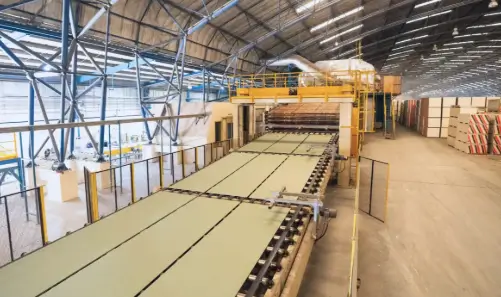
When most people think about drywall, they picture the standard white board going up on a wood or metal frame. But for contractors and material suppliers working on commercial and multi-family projects across the United States, drywall is far more complex than that. The type of board you choose, the assembly you build, and the way you document it all matters — for code compliance, bid accuracy, and project performance.
Understanding the different drywall systems available is not just a technical detail. It directly affects how you buy materials, how you bid jobs, and how you manage subcontractor scope.
Why Specialty Drywall Systems Matter More Than Ever
Building codes in the U.S. have become increasingly specific about wall and ceiling assemblies. The International Building Code (IBC), local fire marshals, and project architects are all demanding documented, tested assemblies — not just any board nailed to a stud. This is pushing contractors to become more knowledgeable about the systems they are installing, not just the square footage.
For material suppliers, this shift creates both opportunity and responsibility. Stocking the right products — and being able to advise your contractor clients on which board fits which application — is a real competitive advantage.
Contractors who work with a reliable drywall takeoff services provider can get accurate quantities broken out by board type, assembly, and location — which makes procurement planning and subcontractor leveling significantly easier.
Fire-Rated Drywall Systems
Fire-rated drywall, commonly known as Type X or Type C board, is required in walls and ceilings that must achieve a specific fire-resistance rating — typically 1-hour or 2-hour assemblies. These ratings are tested and published by UL (Underwriters Laboratories) and must be followed precisely on commercial projects.
Key points for contractors:
- Type X (5/8″ thick) is the most common fire-rated board used in commercial construction
- Type C is an enhanced version with better performance under heat — often used where higher ratings are required
- Assembly details matter just as much as the board itself — stud spacing, fastener type, and joint treatment all affect the rated assembly
- Substituting a non-rated board in a rated assembly is a code violation, not just a quality issue
For material suppliers, fire-rated board is a high-volume product on commercial jobs. Understanding which projects require it and in what quantities helps you plan inventory and offer better lead time commitments to your customers.
Acoustic Drywall Systems
Noise control is becoming a standard requirement on many project types — hotels, medical offices, multifamily housing, and mixed-use developments all have acoustic performance goals written into their specs.
Acoustic drywall systems typically involve one or more of the following:
- Sound-dampening board — such as QuietRock or similar products with built-in damping compounds
- Double-layer drywall assemblies — two layers of board with resilient channels to break sound transmission paths
- Decoupled wall assemblies — where the framing itself is isolated to prevent vibration transfer
STC (Sound Transmission Class) ratings drive these decisions. A wall rated STC 50 performs very differently from a standard partition rated STC 35. Contractors who do not account for these differences in their scope and quantities often end up with change orders — or worse, failed inspections.
See also: Business Utility Management For Commercial Properties
Moisture-Resistant and Mold-Resistant Systems
Standard drywall has no place in wet or high-humidity environments. Yet it still ends up in bathrooms, locker rooms, and commercial kitchens far too often — leading to mold, callbacks, and warranty claims.
The right products for these applications include:
- Moisture-resistant (MR) board — for areas with indirect moisture exposure like bathroom ceilings
- Cement board / backer board — for direct wet areas like shower walls and tile substrates
- Mold-resistant board — treated with fiberglass facing instead of paper, suitable for humid environments
Working with a professional drywall estimating services that understands how to separate these board types by location and application ensures your material lists are accurate from the start — and reduces the risk of installing the wrong product in the wrong place.
Practical Takeaway for Contractors and Suppliers
The days of treating all drywall the same are over on most commercial projects. Here is what to keep in mind:
- Always reference the wall type schedule and UL assembly numbers on the drawings
- Break out your quantities by board type, not just total square footage
- Confirm moisture and fire requirements room by room on every project
- Communicate with your supplier early — specialty boards have longer lead times
Final Thought
Standard drywall still has its place, but the majority of commercial construction in the U.S. today requires a mix of systems — fire-rated, acoustic, and moisture-resistant assemblies often appear on the same project. Contractors and suppliers who understand these systems, plan for them early, and document them properly will always have an edge over those who treat drywall as an afterthought.
The wall is only as good as what goes into it.