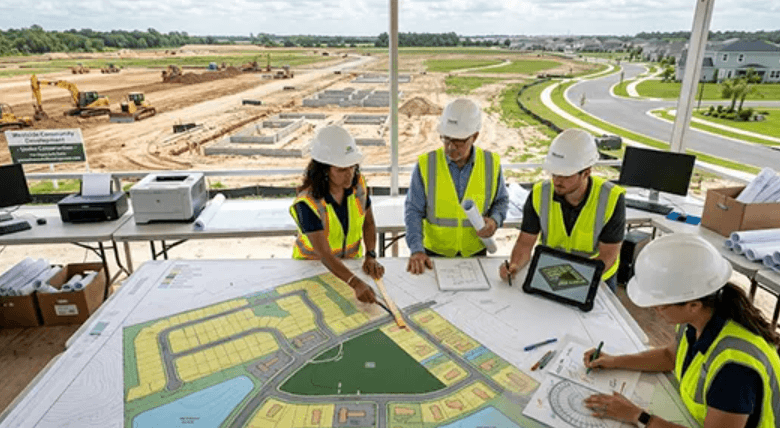
Land development projects are becoming one of the fastest-growing areas in the construction industry across the United States. As cities expand and businesses continue investing in housing, logistics centers, manufacturing facilities, and renewable energy projects, contractors and material suppliers are seeing major opportunities in site preparation and land improvement work.
Before buildings, roads, utility systems, or industrial facilities can be constructed, the land must first be prepared correctly. This process includes clearing, excavation, grading, soil stabilization, drainage systems, utility installation, and erosion control.
Modern land development projects are becoming larger and more complicated than in the past. Contractors now face tighter schedules, environmental regulations, labor shortages, and rising equipment costs. At the same time, project owners expect faster completion and more accurate budgeting.
Because of these changes, companies are focusing more heavily on planning, communication, and digital technology. Contractors and suppliers who improve efficiency and coordination are building stronger positions in competitive markets.
The Growth of Land Development Across the Country
Construction activity continues growing in many parts of the United States because of population increases and commercial expansion. Housing developments, industrial parks, transportation facilities, and data centers all require extensive land preparation before vertical construction can begin.
Southern and western states remain especially active because businesses and residents continue relocating to these regions. New subdivisions, warehouses, and manufacturing facilities are creating strong demand for excavation contractors and earthmoving suppliers.
Large-scale logistics projects are also increasing because online commerce and shipping operations continue expanding. Distribution centers require massive site preparation work involving grading, drainage systems, and utility infrastructure.
Renewable energy projects are creating additional opportunities for contractors working in rural areas. Solar farms and battery storage facilities often require large amounts of clearing, trenching, and access road construction.
As development activity increases, contractors must manage multiple phases of work while maintaining strict schedules and budget controls.
Why Accurate Site Preparation Matters
Site preparation is one of the most important stages of any construction project. Problems during excavation or grading can create serious delays and expensive repairs later during construction.
Improper grading may lead to flooding problems, drainage failures, unstable foundations, or utility conflicts. Because of these risks, developers and project owners expect contractors to perform sitework with greater precision than ever before.
Modern projects also involve complicated underground utility systems. Water lines, sewer systems, electrical conduits, communication networks, and stormwater infrastructure must all be coordinated carefully during early construction phases.
Contractors are investing more in surveying systems, digital mapping technology, and GPS-guided equipment to improve accuracy.
Material suppliers are also becoming more involved during site planning. Aggregate suppliers, utility product distributors, and erosion control providers help contractors organize material deliveries and maintain project schedules.
Better planning during site preparation helps reduce delays and improves long-term project performance.
Technology Is Changing Earthmoving Operations
Technology is transforming the way excavation and grading projects are managed. Contractors are now using advanced systems to improve productivity, reduce waste, and monitor projects more accurately.
GPS-controlled equipment has become common on many large sitework projects. Bulldozers, graders, and excavators equipped with digital guidance systems can perform more accurate work while reducing fuel usage and rework.
Drone technology is also becoming more important for land development projects. Contractors use drones to monitor grading progress, inspect drainage systems, and improve communication with project owners.
Digital mapping and surveying software allow contractors to analyze land conditions more efficiently before work begins. Better information helps companies prepare more accurate schedules and budgets.
Cloud-based project management systems improve communication between contractors, suppliers, engineers, and field crews. Teams can share updates instantly, helping projects move more smoothly.
Artificial intelligence is beginning to influence site planning as well. Some software systems can analyze soil conditions, weather forecasts, and historical project data to identify possible scheduling risks before problems appear.
Material suppliers are using digital inventory tracking and transportation systems to improve delivery coordination and reduce downtime.
Infrastructure Expansion Is Driving Demand
Infrastructure development remains one of the strongest sectors in the construction industry. Transportation systems, utility upgrades, water treatment facilities, and public works projects all require major land preparation activities.
Road expansions, airport improvements, rail systems, and bridge construction projects create strong demand for excavation contractors and aggregate suppliers.
Public infrastructure projects often involve strict engineering standards and aggressive schedules. Contractors working on these jobs must carefully coordinate equipment, labor, and material deliveries.
Large public projects also require accurate documentation and environmental compliance. Companies that maintain organized project management systems often perform better on government-funded work.
Infrastructure growth benefits suppliers as well. Aggregate materials, piping systems, drainage products, geotextiles, and erosion control materials remain in high demand.
Contractors experienced in infrastructure sitework are becoming increasingly valuable because many public projects involve complex utility systems and heavy earthmoving operations.
See also: Strengthening Corporate Governance Through Structured Business Support
Labor Shortages Continue Creating Challenges
The shortage of skilled construction workers remains a major issue throughout the industry. Excavation projects depend heavily on experienced equipment operators, surveyors, utility installers, and grading crews.
Many experienced workers are retiring, while fewer younger workers are entering construction trades. This situation is increasing labor costs and making scheduling more difficult for contractors.
Some companies struggle to maintain project timelines because they cannot find enough qualified operators and field supervisors.
To address these challenges, contractors are investing more in apprenticeship programs and technical training efforts. Some firms are also partnering with trade schools to attract younger workers into heavy construction careers.
Technology is helping reduce some labor pressure. Automated equipment and digital guidance systems improve productivity and allow contractors to complete certain tasks more efficiently.
However, experienced field personnel remain extremely important for large land development projects that involve changing site conditions and complicated engineering requirements.
The Impact of Weather on Sitework Projects
Weather conditions continue affecting construction schedules across many parts of the country. Heavy rain, flooding, snow, and extreme heat can delay excavation work and increase project costs.
Earthmoving operations are especially sensitive to weather because wet soil conditions may prevent grading and compaction activities.
Contractors are using advanced weather forecasting tools and scheduling software to reduce weather-related risks. Better forecasting helps project managers adjust schedules before major storms affect operations.
Drainage planning is also becoming more important because many regions are experiencing stronger storms and changing rainfall patterns.
Material suppliers must manage weather risks as well. Flooded roads, transportation delays, and difficult site conditions can affect delivery schedules and equipment access.
Companies that improve communication and planning during weather disruptions are often able to reduce downtime and protect project schedules more effectively.
Environmental Regulations Are Increasing
Environmental rules continue shaping land development projects throughout the United States. Contractors must follow regulations related to erosion control, stormwater management, soil protection, and dust control.
Many projects now require detailed environmental reviews before excavation activities can begin. Contractors who fail to follow regulations may face project delays, fines, or permit issues.
Developers are also focusing more on sustainable land development practices. Green infrastructure systems, stormwater retention designs, and environmentally responsible grading methods are becoming more common.
Material suppliers are adapting as well by offering environmentally friendly erosion control products and recycled aggregate materials.
Companies that understand environmental compliance requirements often gain advantages during bidding and permitting processes.
The Role of Accurate Quantity Planning
Accurate quantity planning is becoming essential for successful earthmoving projects. Excavation work involves large amounts of material movement, fuel usage, equipment operation, and transportation coordination.
If contractors underestimate excavation quantities or hauling requirements, project costs can increase quickly. At the same time, ordering too many materials may create unnecessary waste and higher expenses.
Because of these challenges, many contractors now use professional earthwork quantity takeoff services to improve budgeting accuracy and reduce financial risks during site preparation projects.
Modern digital systems can calculate cut-and-fill quantities directly from survey data and engineering drawings. These tools improve accuracy while reducing manual calculation errors.
Material suppliers also benefit from accurate planning because contractors can organize deliveries more effectively and avoid scheduling disruptions.
Reliable quantity calculations are especially important on large commercial and infrastructure projects where budgets and timelines are monitored closely.
How Fuel and Equipment Costs Affect Contractors
Fuel prices and equipment expenses remain major concerns for excavation contractors across the country. Earthmoving operations require large machines that consume significant amounts of fuel during daily operations.
Equipment maintenance costs are also increasing because modern machines involve advanced technology and expensive replacement parts.
Contractors are focusing more on operational efficiency to control these expenses. Better scheduling and route planning help reduce unnecessary equipment usage and transportation delays.
Some companies are investing in newer fuel-efficient machines and GPS tracking systems to improve productivity.
Material suppliers face similar challenges because trucking operations depend heavily on fuel availability and transportation efficiency.
Companies that manage fuel consumption and equipment usage carefully are often better prepared to protect profit margins during changing market conditions.
The Rise of Renewable Energy Land Development
Renewable energy construction is creating strong opportunities for excavation contractors and suppliers. Solar farms, battery storage facilities, and utility infrastructure projects often require extensive site preparation work.
Large renewable energy projects involve grading, utility trenching, drainage systems, and access road construction across wide land areas.
Contractors working on these projects must follow detailed engineering standards and environmental requirements.
Material suppliers supporting renewable energy projects are seeing increased demand for aggregate products, piping systems, geotextiles, and erosion control materials.
These projects also create opportunities for heavy equipment rental companies and transportation providers.
As renewable energy development continues expanding, contractors with experience in large-scale site preparation are becoming increasingly valuable.
Why Communication Between Contractors and Suppliers Matters
Strong communication between contractors and suppliers is becoming more important because modern projects move faster and involve tighter schedules.
A delay in material delivery can affect multiple crews working on active job sites. Excavation projects often depend on aggregate deliveries, piping systems, fuel supply, and erosion control materials arriving on time.
Many suppliers are now using digital ordering systems and real-time delivery tracking to improve coordination with contractors.
Cloud-based communication platforms also allow project managers to share schedule updates instantly with suppliers and field teams.
Companies that maintain strong supplier relationships often solve problems more quickly and avoid major project disruptions.
Reliable communication improves scheduling accuracy and helps contractors respond faster to changing project conditions.
How Digital Takeoff Systems Improve Site Planning
Manual quantity calculations once required large amounts of time and often created opportunities for costly mistakes. Today, contractors are using advanced software to improve site planning and budgeting accuracy,
Many firms now depend on professional earthwork takeoff services to organize excavation quantities, hauling plans, and grading operations more efficiently.
Digital takeoff systems help contractors calculate material movement and project costs directly from engineering models and survey data.
These tools improve communication between contractors, engineers, and suppliers because project information can be shared more clearly during planning stages.
Large development projects involving complicated grading and utility systems benefit greatly from accurate digital takeoff systems.
Technology will likely continue improving site planning in the future as artificial intelligence and automated design software become more common throughout the construction industry.
The Future of Land Development Construction
Land development projects will continue playing a major role in the growth of the construction industry across the United States. Housing expansion, infrastructure investment, industrial growth, and renewable energy development are creating strong long-term demand for site preparation services.
Technology will remain one of the biggest drivers of change in excavation and grading operations. GPS-controlled equipment, drones, digital mapping systems, and automated project management tools are already improving productivity and reducing delays.
Contractors and suppliers who invest in better planning systems and stronger communication practices are likely to remain more competitive.
Environmental regulations, labor shortages, fuel costs, and transportation challenges will continue affecting the market. Companies that improve operational efficiency and adapt to changing conditions will be better prepared for long-term growth.
The relationship between contractors and suppliers is becoming more important because modern projects require faster scheduling, accurate material planning, and dependable logistics support.
Successful land development projects now depend on technology, communication, forecasting, and strong operational management from the earliest stages of construction.
For contractors and material suppliers, the construction industry still presents many challenges. However, businesses willing to improve planning systems and embrace modern technology are creating stronger opportunities for future growth throughout the United States.